In the sprawling, rain-slicked streets of Night City, a ghost was born in late 2023. A player known as Livebythecreed39 had been pushing the limits of Cyberpunk 2077’s massive 2.0 overhaul when they inadvertently created the most broken stealth build the game had ever seen. The discovery rewrote the rules of invisibility, leaving enemies utterly oblivious to V’s presence—even when the mercenary was standing right next to them, casually slotting a silenced pistol into a buddy’s skull. It all started with a deep dive into the newly revamped Perk tree, and what emerged was a thing of legend.
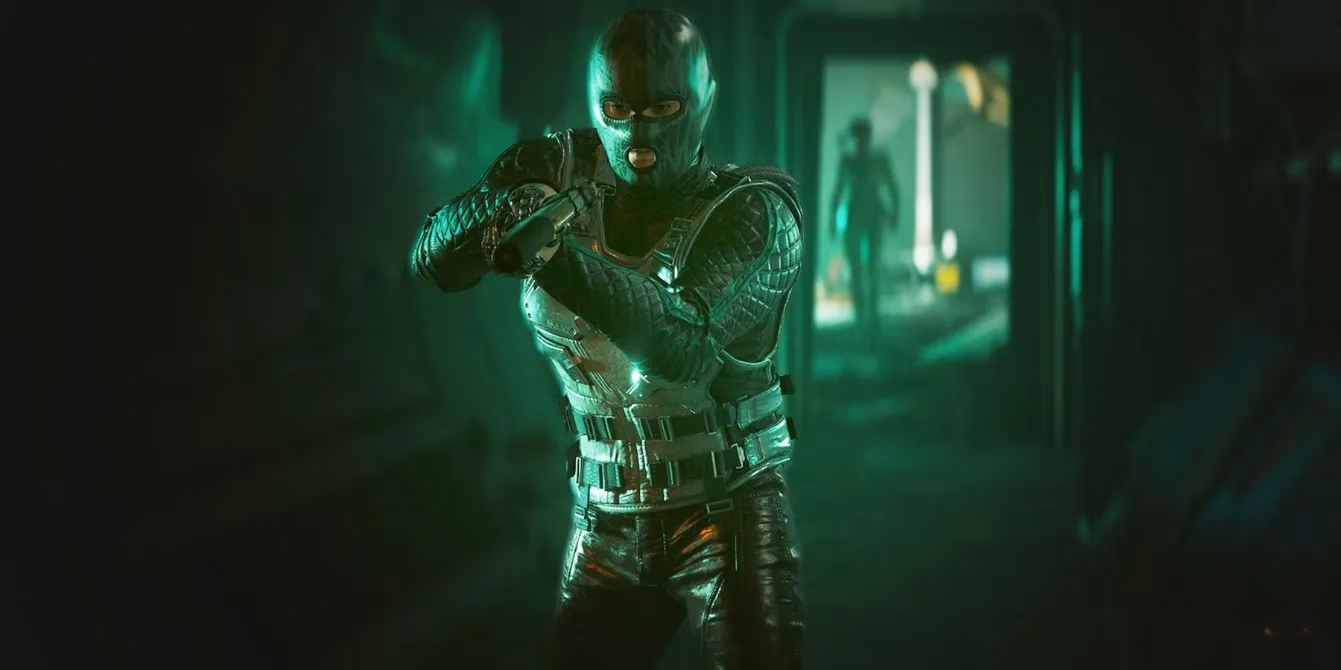
Livebythecreed39’s journey into stealth godhood began on a lazy Sunday afternoon, the kind where the corpo‑rat-infested streets of Night City feel almost peaceful. They’d been tinkering with the Technical Ability attribute ever since the 2.0 patch dropped on September 21 of that year, a mammoth update that fundamentally reimagined how skills and cyberware worked. The Perk overhaul was jarring at first—veteran players grumbled that stealth had been nerfed into the ground—but Livebythecreed39 saw something others missed. If you pushed Technical Ability to its absolute ceiling and cherry-picked the right nodes, you could unlock the Edgerunner talent, a late‑game perk that dramatically expands cyberware capacity. "A no‑brainer for any chrome junkie," they muttered to themselves, already plotting the next move.
The real trick lay in the ripperdoc clinics scattered across Night City. Cyberware now had random bonus stats, and one particular modifier—a visibility reduction percentage—could stack in ways that defied logic. By rerolling legendary‑grade implants at a ripperdoc, Livebythecreed39 aimed to squeeze a visibility cut of at least 3% from each piece of chrome. If RNG refused to cooperate, a simple 24‑hour wait in‑game reset the clinic’s inventory, so they spent a good chunk of their weekend grinding through day‑night cycles, treating the process like a slot machine you could always walk away from and come back to. The target? Just enough stacked reduction to drop V’s “visible” rating to a laughable 1%.
That’s when things got spooky. At 1% visibility, enemies behaved as if V had simply ceased to exist. Mobs jogged right past the protagonist without so much as a twitch of suspicion, even while the merc ran at full tilt across a brightly lit corridor. Kill a ganger two feet from his best choombatta, and the surviving buddy just stood there, staring at a corpse with the absent-minded confusion of someone who missed the last bus. Livebythecreed39’s testing revealed an even stranger quirk: pushing visibility below zero broke the game’s detection math entirely, snapping V back to full visibility as if the engine threw up its hands in despair. So 1% became the magic number, a razor‑thin edge between being a ghost and becoming a glowing neon sign. “Ain’t that something,” the player chuckled, “the game can’t handle a negative ghost.”
What made the build particularly bonkers was its economy. Honing that 1% visibility required only eleven Perk points sunk into the Technical Ability branch, leaving a huge reservoir of points to craft a hybrid monster. You could be a netrunner who walks through secure server rooms while guards sip cheap coffee, or a berserk gorilla‑arms brawler who head‑butts someone and still slips away without a witness. The community, at first skeptical, soon flooded forums with their own riffs on the template—some adding cold‑blooded resilience, others splicing in Sandevistan speed boosts to turn stealth into a practical joke. The sheer flexibility meant the build wasn’t just a one‑trick ghost; it was a platform for whatever flavor of mayhem a player could dream up.
Time has a funny way of cementing legends. Even now, in 2026, chatter about the “1% phantom” still bubbles up on servers and BBS threads. The 2.0 update remains a watershed moment for Cyberpunk 2077, and this build stands as a testament to its chaotic depth. Yes, Phantom Liberty later added even more toys, and some subsequent hotfixes may have nudged the numbers here and there, but the core principle still works—at least for those who know how to bends the chrome. Livebythecreed39’s discovery became a quiet counter‑argument to the no‑stealth complainers, a living proof that with enough ingenuity, the silent approach could be more broken than ever before. It also taught a valuable lesson: sometimes the best way to fix a game is to break it just a little.