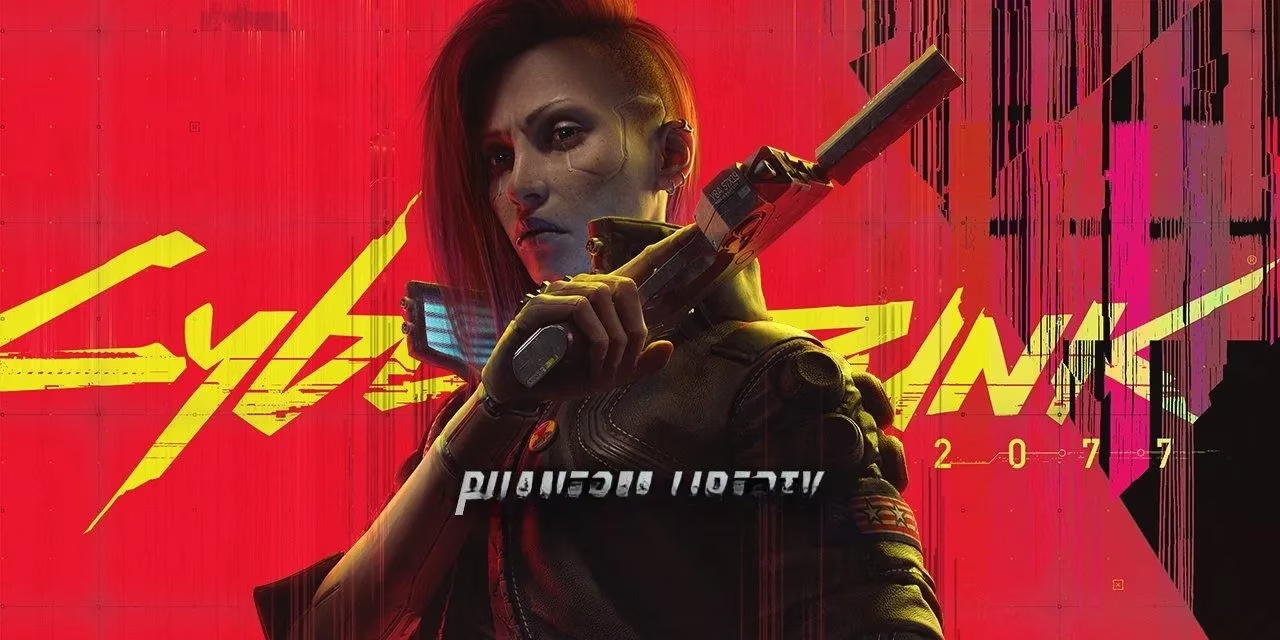
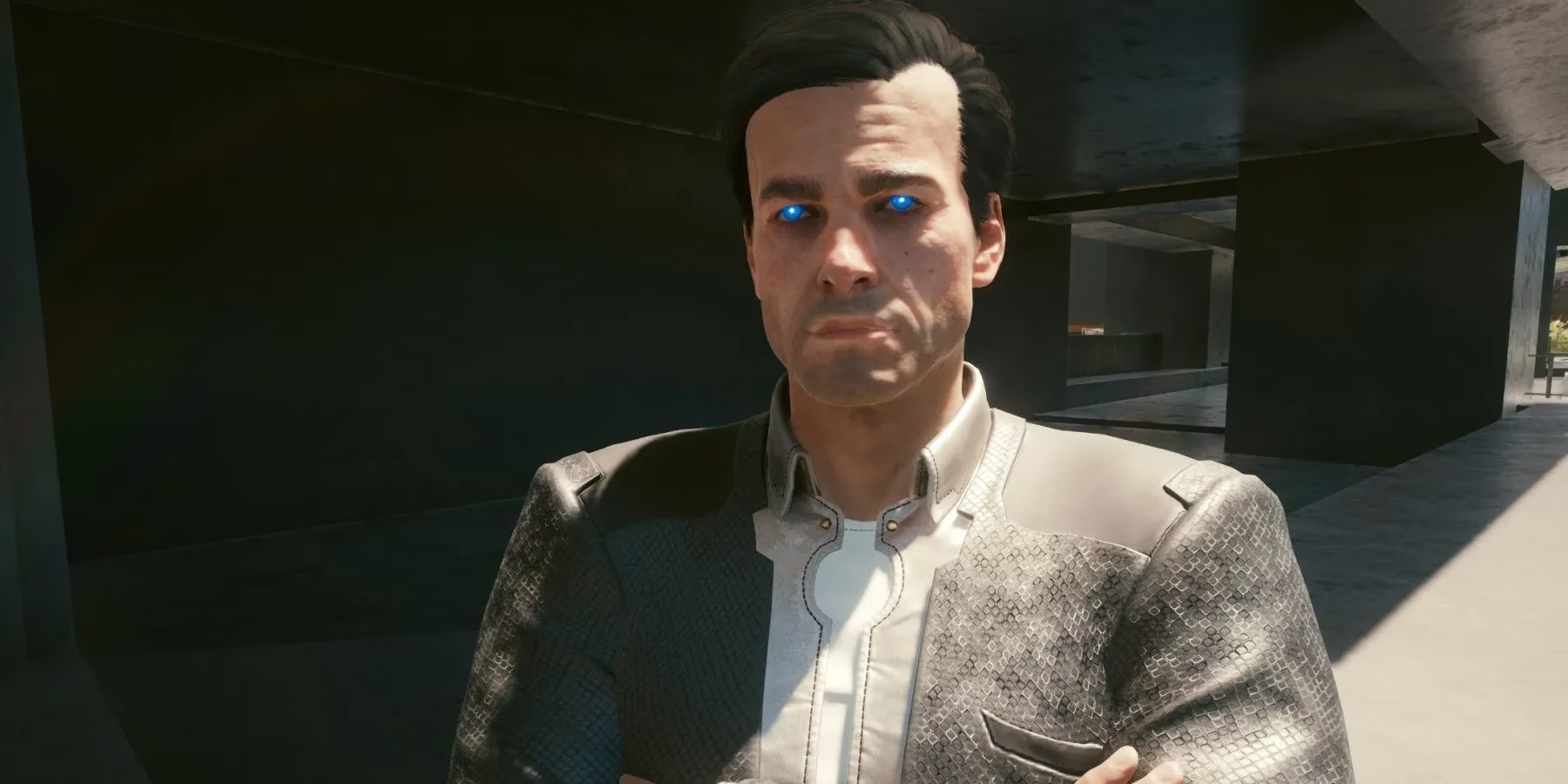
Let me take you back to a moment during my latest Cyberpunk 2077: Phantom Liberty playthrough. I was deep into the main story, specifically the quest The Killing Moon, when I found myself inside an elevator heading to the roof. As V glided past an overhanging observation deck, I caught a flicker of movement behind the glass. It was a group of NPCs looking down at me—totally normal for Night City—but something felt... off. So I zoomed in. I scanned that one figure standing perfectly still, bathed in cold neon light, and boom. Mr. Blue Eyes. My jaw literally dropped, and I had to pause and just stare. Even now in 2026, that tiny, almost missable cameo gives me chills every single time.
If you’re new to Cyberpunk 2077, you might think, "Okay, some random corpo guy in a suit, what’s the big deal?" And honestly, I don’t blame you. The game never holds your hand or explains why this spectral figure matters. In fact, without the right cyberware to zoom in, you’d probably sprint right past him without a second thought. But for those of us who have put hundreds of hours into Night City since the rocky 2020 launch, Mr. Blue Eyes is the game’s greatest riddle—a ghost, a puppet master, someone whose face we know but whose motives remain a total blank. Phantom Liberty tucked him into a corner during its most tense mission, and the community still hasn't stopped talking about it.
So why does this guy tickle our brains so much? Well, here’s the thing. In the base game, Mr. Blue Eyes appears in only a handful of places, and he’s always watching. He’s most famous for showing up in one of Cyberpunk 2077’s endings, where he hires V for a mysterious, high-stakes job—possibly a heist involving the Crystal Palace space casino. He also played a behind-the-scenes role in Songbird’s lunar escape. We know he moves pieces on the board, but his "why" is a locked box. No dialogue dumps backstory on you. No shard fills in the gaps. He’s just... there, like a shadow you can’t shake off. And Phantom Liberty didn’t exactly rush to explain him, either. Instead, it doubled down, placing him exactly where the most consequential choices unfold.
Now, fast-forward to 2026. We’ve had years to theorize, to comb through every pixel of every scene, and guess what? We’re still arguing about this guy. Is he an AI in a humanoid shell? A rogue agent of the mysterious Night Corp? Something even weirder? What’s exciting is that CD Projekt Red didn’t just leave us hanging with no breadcrumbs. The studio has dropped hints about Project Orion, the next main Cyberpunk game, and I’d bet my favorite pair of Kiroshi optics that Mr. Blue Eyes is tied to it. His presence in the secret ending, his connection to Songbird, and his habit of popping up just when V’s story reaches a fork point all scream “sequel material.” He might be the Kaizer Sozé of this universe, and I am here for it.
What really gets me is how CD Projekt Red uses him to make the world feel deeper. Cyberpunk 2077’s initial disaster in 2020 almost buried the game, but the 2.0 update and Phantom Liberty expansion turned it into something legitimately special. By 2026, many of us have moved on to new titles, but I still return to Night City just to chase echoes of Mr. Blue Eyes. He’s the kind of character who rewards obsessive players—the ones who read every email, who slow-walk through missions just to spot hidden details. And let’s be honest, spotting him in The Killing Moon felt like the developers winking at us. They know we’re looking. They want us to be a little paranoid, a little obsessed.
Looking ahead, I’m cautiously optimistic. Project Orion hasn’t gotten a full reveal yet, but the rumors are heating up, and if Mr. Blue Eyes steps out of the shadows to take center stage, it could be a narrative masterstroke. Until then, I’ll keep replaying Phantom Liberty, trying to catch him in other spots, hoping for a crumb of fresh lore. If you haven’t gone hunting for him yet, I highly recommend it—just make sure your scanner is upgraded, and maybe, uh, don’t stare too long. After all, he might be staring right back.