Remember when Cyberpunk 2077 launched? Of course you do. It's etched into gaming history as one of the most spectacular face-plants of all time. A critic who endured the whole saga—from the pre-launch lies about console versions to the curated demos that felt more like elaborate magic tricks—might look back now in 2026 and feel a sense of surreal whiplash. The game that was once a symbol of broken promises and corporate hubris is now, with the Phantom Liberty expansion and the transformative 2.0 update, being hailed as the masterpiece it was always meant to be. Talk about a plot twist worthy of Night City itself! But as the dust settles and a shiny new 'Ultimate Edition' physical copy for PS5 and Xbox hits shelves, one can't help but feel a bit... conflicted. Is this a true redemption arc, or are we just being asked to forget the three-year-long patch note that was the game's initial existence?
From Digital Dumpster Fire to GOTY Contender
Let's rewind. The launch state of Cyberpunk 2077 wasn't just buggy; it was a masterclass in how not to release a game. Rushed out to appease shareholders after multiple delays, it arrived on base consoles in a state so dire it was literally pulled from sale. The development team had been crunched into oblivion, and it showed. For all the flawless virtual slices shown to the press, the final product on PlayStation 4 and Xbox One was a glitchy, underbaked mess. A powerful PC could make it look like a dream, but the dream was full of T-posing NPCs and a world that felt oddly hollow for something calling itself 'Cyberpunk'.
Fast forward to today. Phantom Liberty and Update 2.0 didn't just fix bugs; they performed open-heart surgery. The game now boasts:
-
Excellent, memorable characters who finally have a world worth living in.
-
Gameplay that feels fantastic, with revamped skill trees and combat.
-
A selection of strong, compelling stories, with Phantom Liberty's spy thriller often landing on critics' Game of the Year lists.
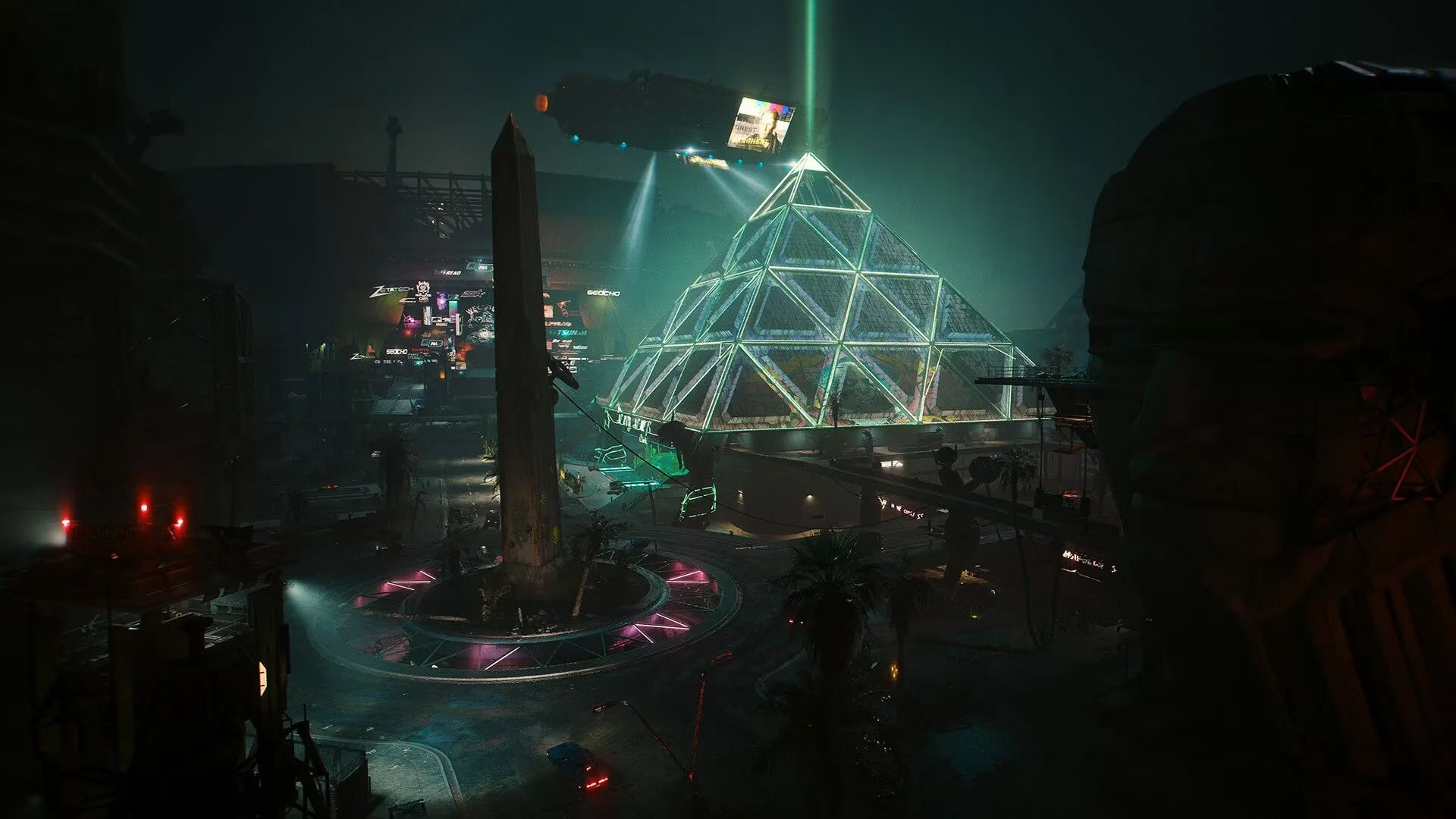
The developers, the ones who actually did the grueling work of rebuilding this digital city from the ground up, deserve immense credit. They took a project plagued by terrible executive decisions and turned it into something they can be genuinely proud of. After the disastrous launch, CD Projekt Red's community outreach shifted dramatically—away from flashy ads and toward developers directly addressing problems and outlining solutions. It was awkward, sure, but it felt real. So, shouldn't this be a pure victory lap?
The 'Ultimate' Conundrum: Preservation or Amnesia?
Enter the 'Ultimate Edition.' This new physical release contains the complete, polished 2.0 update on the disc, with Phantom Liberty included as a download code (or on-disc for some platforms). On one hand, this is crucial for game preservation. Once servers go offline years from now, this will be the definitive, functional version of the game for future generations. A museum piece, but a working one.
But calling it the 'Ultimate Edition'? That's where the conflict sets in. Marketing this as the pinnacle of the experience feels... insincere. It subtly frames the game's journey as: "Here is the ultimate version of our vision," rather than "Here is the game after we spent three years fixing the broken version we sold you." It risks erasing the very public, very painful history of the launch. Will gamers in 2030 only know this polished gem, completely unaware of the catastrophic 1.0 version that reshaped industry conversations about crunch, marketing, and ethics?
| Edition | What It Represents | The Potential Problem |
|---|---|---|
| Launch Version (1.0) | A cautionary tale of hype, crunch, and broken promises. | A relic that deserves to be studied, not forgotten. |
| Ultimate Edition (2.0 + Phantom Liberty) | The triumphant, polished final form of the game. | Markets itself as the intended vision, whitewashing the rocky journey. |
Doesn't it feel wrong to let the executives who greenlit the disastrous launch simply bask in the glow of a successful 'Ultimate Edition'? The developers earned this victory, but the branding feels like it absolves the higher-ups of past sins. Phantom Liberty's marketing, with its focus on Idris Elba and blockbuster trailers, already showed a slide back to the old ways of flash over substance. Is this Ultimate Edition another sign that CDPR is getting comfortable again, forgetting the hard lessons it learned?
The Ghost in the Machine: Why We Can't Forget 1.0
Cyberpunk 2077's original launch was arguably the most disastrous in video game history. It wasn't just a bad game; it was a cultural moment that exposed unsustainable development practices and shattered player trust. To completely bury that version is to bury the evidence. That broken code is a historical document! It shows the cost of crunch, the failure of over-hype, and the limits of 'release now, patch later.'
Think about it: if we only preserve the 'Ultimate' version, we lose the context. Future game historians might look at Cyberpunk 2077: Ultimate Edition and see a great RPG. They'd miss the critical chapter about the industry's relationship with its workers and its customers. The game's miraculous recovery is only meaningful because of how far it had to come. Forgetting the launch is a betrayal of everyone who endured it and a surefire way for the industry to repeat the same mistakes. After all, why worry about a polished launch if you can just sell the 'fixed' version three years later as the 'ultimate' experience?
A Legacy Forged in Fire (and Patches)
So, where does that leave us in 2026? Cyberpunk 2077 is, by all accounts, a fantastic game now. It has excellent characters, thrilling gameplay, and stories that stick with you. Phantom Liberty is a top-tier expansion. The developers have done the impossible. But the game's legacy is—and must remain—a two-part story.
-
Part One: The Fall. A story of hubris, broken promises, and a launch that became a global punchline.
-
Part Two: The Redemption. A story of relentless work, community engagement, and a team's determination to salvage their vision.
The 'Ultimate Edition' is the trophy for Part Two. But we can't let it delete Part One from the record. Cyberpunk 2077's greatest strength in 2026 isn't just its refined gameplay or its gripping story; it's its entire journey. It's a living lesson. The second CD Projekt Red, or any studio, forgets the harsh lessons of 2020, we're all doomed to relive them. The game can't forget what it used to be, no matter how good it has become. Because in the neon-drenched, corporate-ruled world of Cyberpunk, forgetting history is the first step toward repeating it. And nobody wants another launch day in Night City.