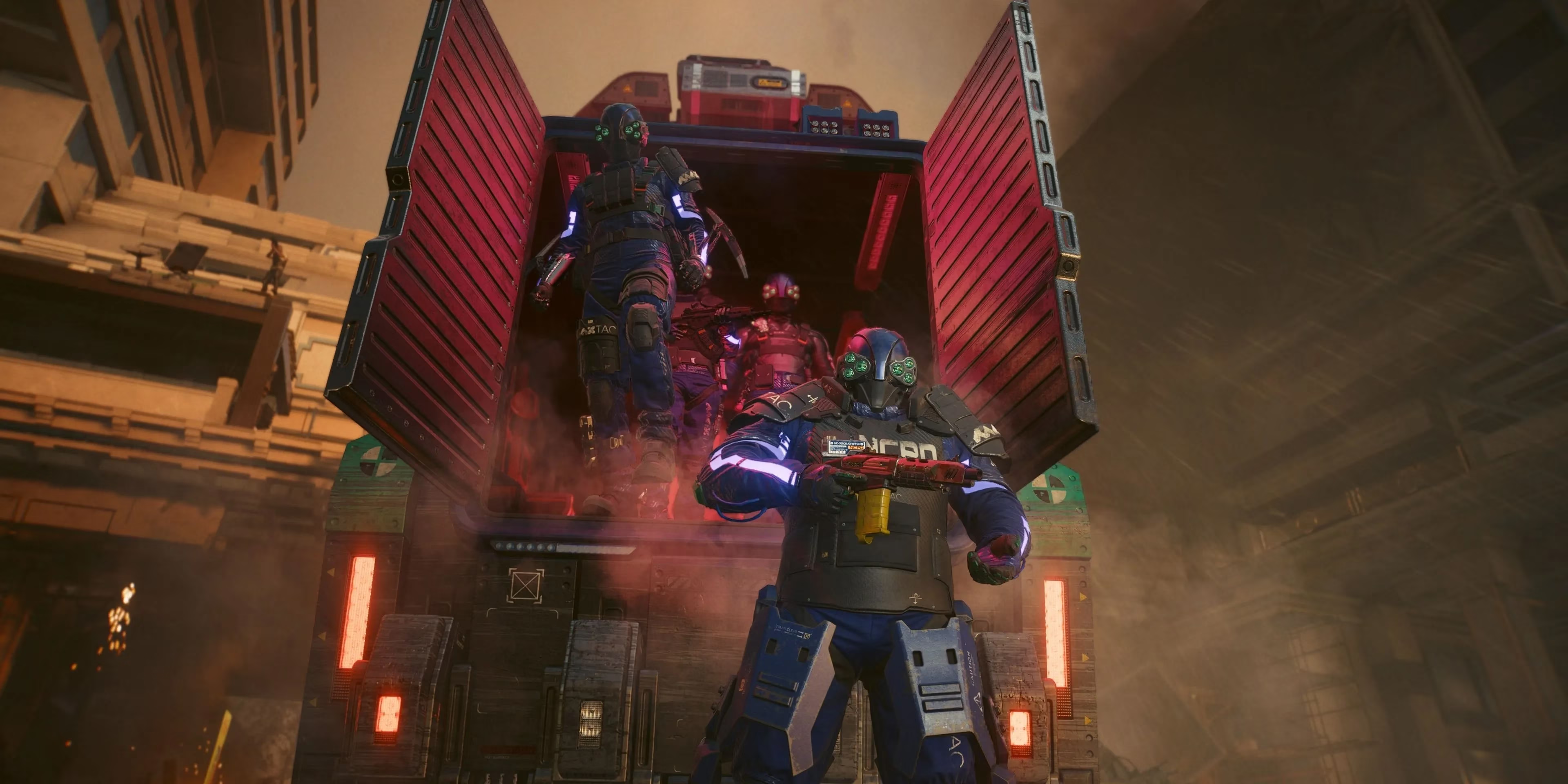
So here I am, sitting at my rig in 2026, still vividly remembering the moment Cyberpunk 2077: Phantom Liberty ripped away all my shiny chrome and threw me into pure psychological horror. CD Projekt Red promised us spy-thriller vibes, and for the most part they delivered—but if you’re anything like me, you got curious about that branching path where you side with Solomon Reed instead of Songbird. Big mistake. Huge. Instantly, the game dropped the action-RPG power fantasy and became something that felt ripped straight out of Resident Evil or Silent Hill, complete with spine-chilling atmosphere, helplessness, and a boatload of existential dread. 🎭
Let me set the stage. I’ve been rolling through Night City as a maxed-out netrunner V, dodging bullets, quickhacking everything in sight. Then comes the penultimate quest of the DLC, and I make the fateful call: I trust Reed. That singular choice locked me into a path that extends the expansion with a few extra quests—and the grand finale is the unforgettable Somewhat Damaged mission. I strolled into an abandoned Cynosure facility, thinking it would be just another infiltration gig. Johnny Silverhand’s voice crackled in my head for a moment before everything went eerily silent. He lost contact. No snarky commentary, no guitar riffs—just dead air. 🕳️
The vibe shift was immediate. The building is this decaying metallic labyrinth coated in shadows and flickering emergency lights. As I crept through hallways, my Kiroshi optics started glitching. Static crawled across the screen. Then I heard Songbird’s voice behind a sealed door—but she wasn’t talking to me. She was reliving a conversation with Kurt about the missile launched at Myers’ shuttle. Her memories were being broadcast across the entire facility like ghostly echoes, and that’s when my stomach dropped. This wasn’t a standard extraction. This was a descent into a digital nightmare.
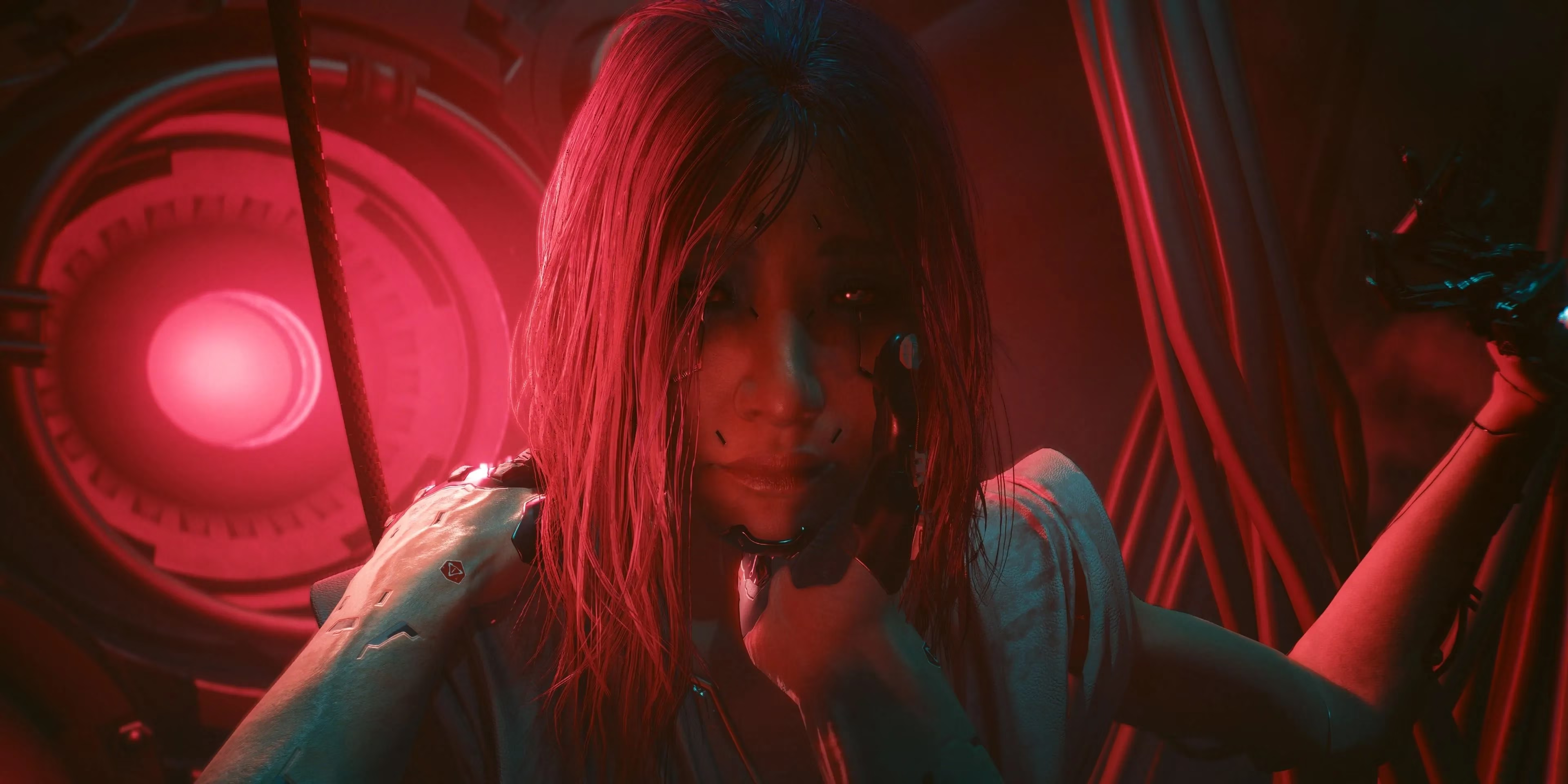
As I pushed deeper, cryptic messages from So Mi made it clear she was battling something monstrous inside the old Cynosure network. Turns out Blackwall AIs had breached her neural link and were puppeteering both her mind and the facility’s dormant robots. That’s when Cyberpunk 2077 tore up its action credentials and morphed into a full-blown horror game. The first robot encounter could easily be described as a jumpscare that brews slowly—it descends from a ceiling shaft with grinding metal and red eyes, lunges, and Songbird barely manages to stall it before it finishes me. Then the chase begins. The heavy, rhythmic clanking of possessed droids reverberating through steel corridors; my heart was pounding louder than the synth bass in a Maelstrom party. 🏃♂️💀
For the next hour, I was forced into a hide-and-seek survival loop. No weapons, no quickhacks—just pure evasion. These Cynosure automatons can emerge from any vent, any corner, and they hunt entirely by sound and motion. I crouched behind consoles, holding breath like I was playing Alien: Isolation. Each room doubled as a memory fragment from Songbird’s past: her going through some kind of forced operation, her swearing the oath to the FIA, the first time she met Reed. These scenes played like interactive trauma diaries, and let me tell you, witnessing them while a killer robot tromps outside the door hits different. It’s psychological profiling at its most immersive and disturbing. 🧠🕯️
The horror peaks when one of the AI-controlled machines finally grabs V, plugs into my implants, and starts slowly frying my synapses. Suddenly I’m teleported directly into Songbird’s deteriorating mind. Her childhood memories, her indoctrination, the agony of being turned into a weapon—it all floods the screen in a chaotic red digital space. The room around her dissolves into glitching wireframes as the Blackwall tries to swallow her entirely. At that moment, the only “combat” option is to comfort her through dialogue, pulling her back from the brink. Not a single bullet was fired that entire sequence. For horror fans, this is absolute catharsis, a masterclass in existential terror completely divorced from the power fantasy we’ve been riding for dozens of hours. 👻
After surviving the gauntlet of robo-terrors and memory voids, I finally reached So Mi, hovering between life and digital oblivion. This is where Phantom Liberty drops its heaviest moral dilemma: kill her as she begs, or save her with Reed’s help. Both choices radically alter the DLC’s ending and V’s own fate. Picking Reed earlier isn’t just a narrative divergence—it wholly transforms the gameplay genre. Instead of a spy-action finale, you get this haunting, oppressive crawl that would feel right at home in classic survival horror masterpieces. I genuinely felt my power stripped away as I hid from enemies I used to slice through with mantis blades, and that vulnerability made the story hit so much harder. 😱❤️🩹
Even three years after release in 2026, this stretch of Cyberpunk 2077 stands as one of the boldest tonal shifts I’ve ever experienced in an RPG. Some players grumbled they wanted more espionage set pieces, but honestly? The pure psychological horror route is a secret treasure. It proves CDPR can do more than open-world action—they can channel dread and empathy in equal measure, turning a side quest into one of the most memorable fridge-horror experiences in gaming. If you haven’t checked out the Reed path yet, load up Phantom Liberty, turn off the lights, and prepare for a trip that will rattle your chrome-plated nerves. Trust me, it’s worth every jumpscare. 🕶️🔫👾