I have a confession, choom: I have stuffed so much cyberware into V that my skeleton sounds like a vending machine falling down stairs. In 2026, after Cyberpunk 2077's 2.0 update and the Phantom Liberty expansion have had years to marinate in my brain, I can finally say it out loud. V is not one bad day away from going cyberpsycho. V is practically immune. And the game quietly tells us why.
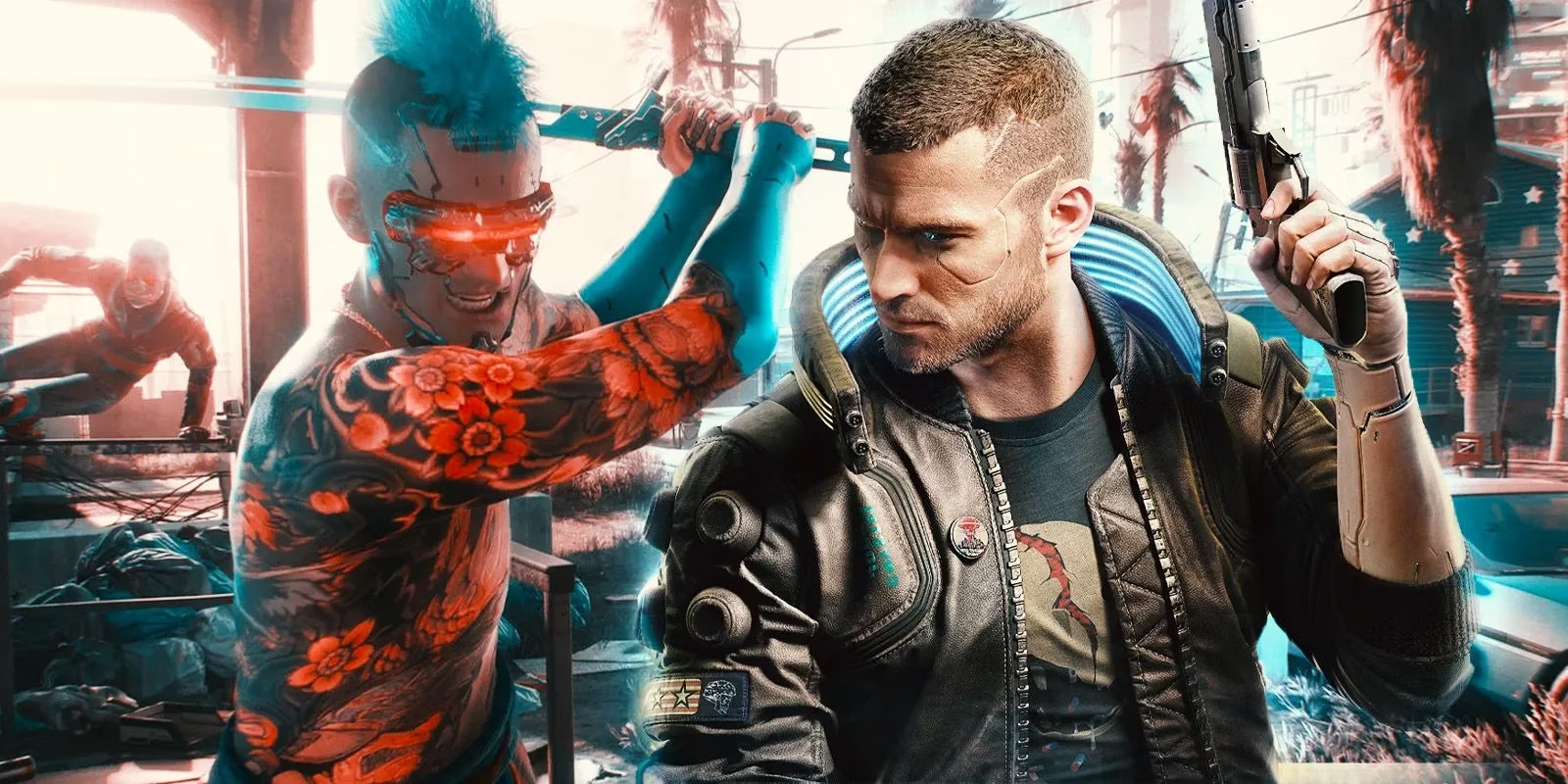
Cyberpsychosis Is Not Just a Chrome Allergy
Back when 2.0 dropped, it brought vehicular combat, a wanted system that makes Night City feel like Grand Theft Auto with more neon and fewer manners, and a full rework of skills, perks, and customization. But the real lore bomb was buried under all those explosions. Cyberpsychosis, the thing that turns augmented people into MaxTac's favorite punching bags, may not work the way Night City's loudest voices claim.
Throughout Cyberpunk 2077, I run around with Regina Jones, a fixer who asks me to bring in cyberpsychos alive. The game initially describes cyberpsychosis as a dissociative disorder caused by too much cybernetic augmentation. The afflicted become violent, aggressive, and convinced that regular meatbags are weak and inferior. Fair enough. But Regina's missions often reveal sadder, messier stories. These are not always monsters. They are people who broke.
Mike Pondsmith, the creator of the Cyberpunk universe, explained on Reddit that cyberpsychosis depends heavily on an individual's mental health. People who are less psychologically stable, less empathetic, or more prone to addiction are more susceptible. He compared cyberware addiction to real-world struggles like alcoholism and steroid abuse. That is a very fancy way of saying the chrome is not the whole problem. The brain underneath the chrome is.
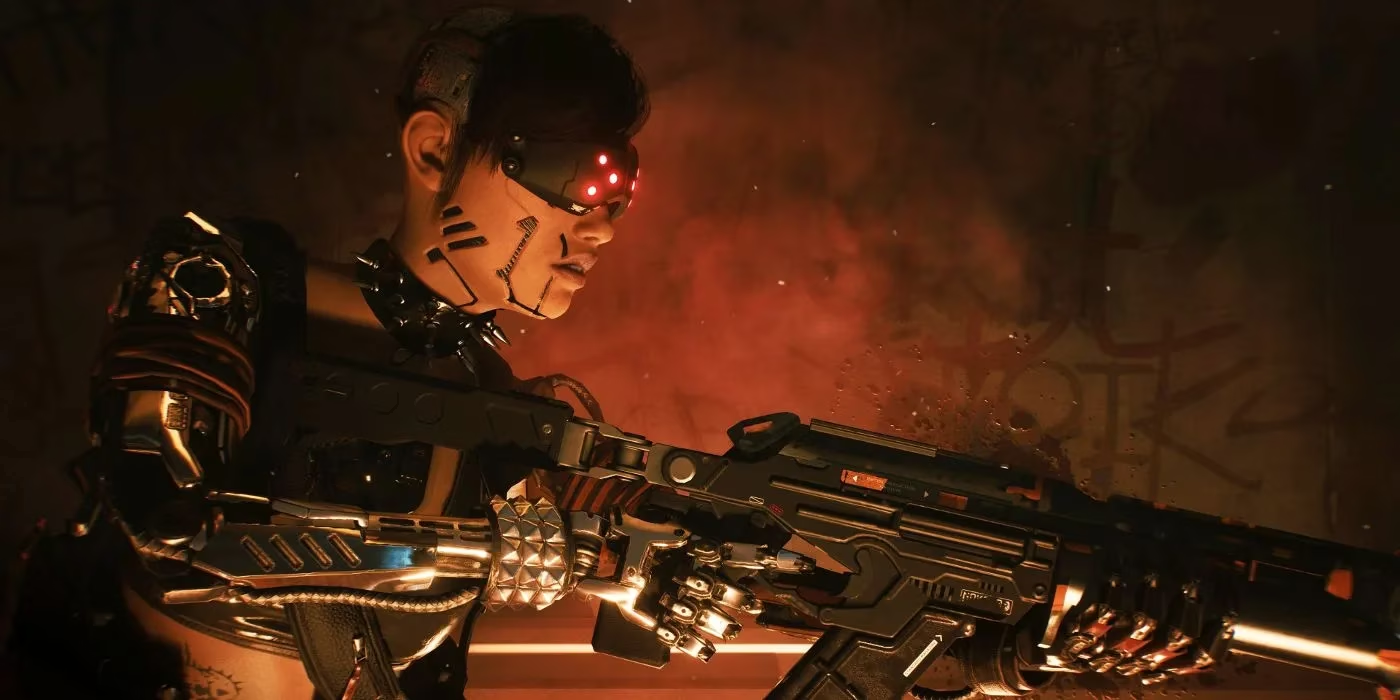
The old fan theory was cumulative. One cyber limb? Fine. Replace all four limbs and both eyes? Welcome to madness. But Pondsmith's comments suggest that model might be a scapegoat. It is easier for feds and corpos to call cyberpsychosis a self-inflicted issue than to actually help people. If you can blame the victim, you never have to pay for therapy. Night City in a nutshell, really.
Johnny Silverhand Is the Ultimate Emotional Support Terrorist
V has another advantage: an Arasaka Relic in their head and a dead rockerboy named Johnny Silverhand living there rent-free. The main campaign implies V is already a special case. Pondsmith even suggested Johnny may have helped V battle cyberpsychosis, especially after Jackie Wells died during the heist. Johnny's rage and attitude acted as a buffer for V's trauma. As Pondsmith put it, it's like having a time-share with a guy who's already half cyberpsycho and doesn't mind if V slaps stuff on their shared body; Johnny's already crazy and violent.
Which is hilarious, if you think about it. Most people need therapy. V needs a digital ghost who screams about corporate oppression and occasionally takes over their body. Not ideal, but apparently effective.
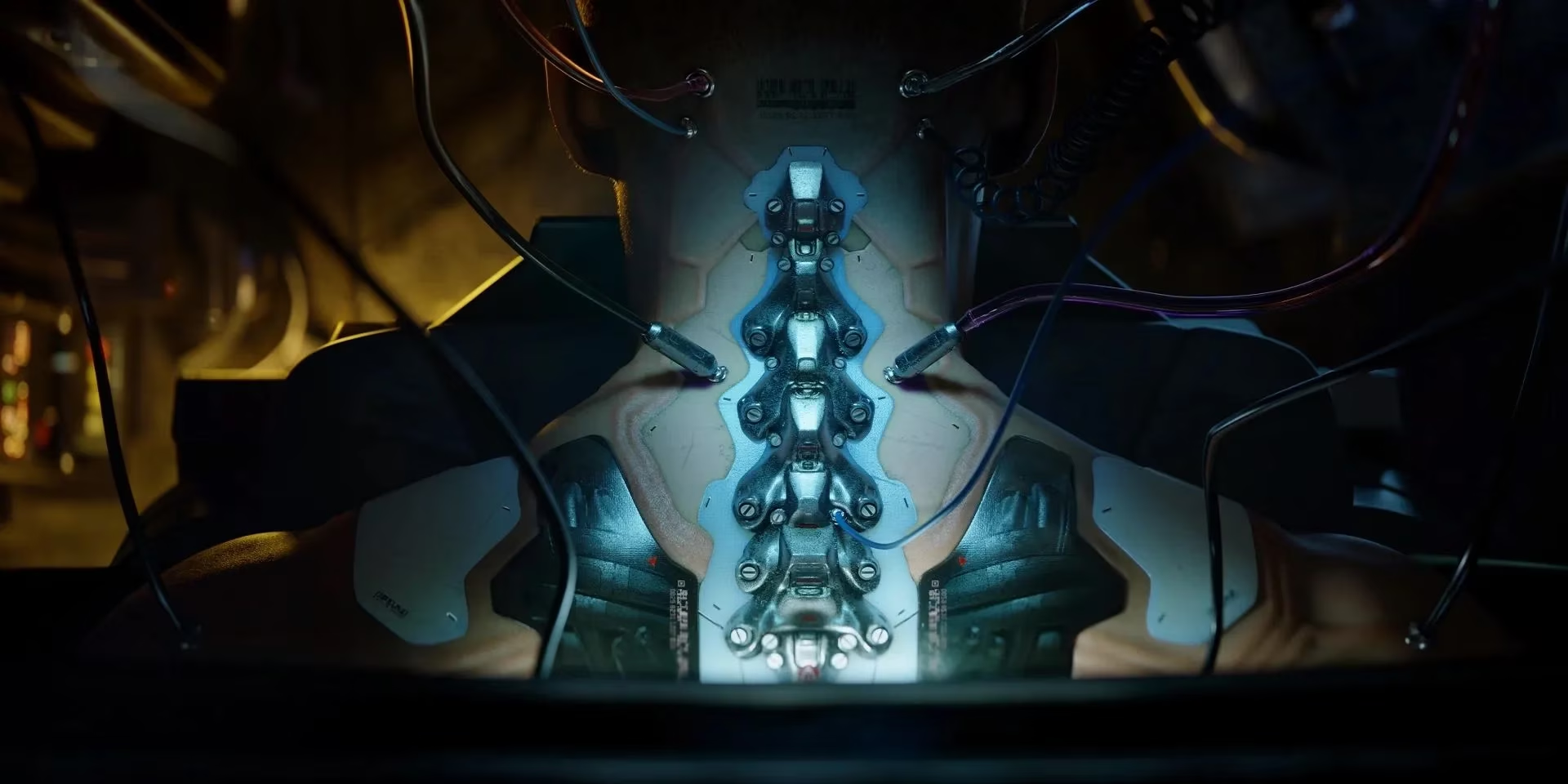
The original story was a race against time. V had to stop the Relic from completely overwriting their motor and psychological functions. There was no room to test whether a full chrome makeover would eventually turn V into a cyberpsycho. Then 2.0 arrived and changed the conversation.
The 2.0 Update and Phantom Liberty Made It Official-ish
The 2.0 update added new cyberware, both legal and illegal, plus a cyberware limiter mechanic. The game finally tells you not to get too rough with chrome. Exceeding the limit does not turn V into a raving cyberpsycho. It just gives debuffs, like lower maximum health. How much cyberware V can install varies with perks. So the worst-case scenario is being slightly squishier, not becoming a boss fight for Regina.
Phantom Liberty added even more twists with a Relic skill tree that grants so-called ultrapowers for a limited time. By 2026, the message is clear. V can chrome up like a cybernetic Christmas tree and still crack jokes, drive badly, and argue with Johnny about whether to save the world or burn it down.
| What people think causes cyberpsychosis | What actually seems to cause it |
|---|---|
| Too much chrome | Mental trauma, low empathy, addiction-prone wiring |
| One more implant equals doom | Pre-existing instability plus any amount of chrome |
| V should be a raving lunatic | V has Johnny, a Relic, and protagonist-grade plot armor |
The Shard That Broke My Brain
The readable shard The Truth About Cyberpsychosis suggests there are many more undiagnosed cyberpsychos in Night City than anyone admits. Some have a simple medical implant, like a knee or liver, and they do not go out in a blaze of gunfire with MaxTac. They become recluses. They detach from society. That matches how cyberware and mental trauma could drain Humanity points and lead to dissociation in Cyberpunk Red.
A lot of cyberpsychos are normal Night City residents who went through war or the violent loss of a loved one. That is why Regina wants them alive. Their stories matter. They are not just loot pinatas with anger issues.
So What Does This Mean for V?
Turning into a cyberpsycho would have completely derailed V's story, and it was never likely to happen. But the new mechanics act as proof that heavily indicates V is immune to these symptoms. Phantom Liberty does not fully explore it, but it offers an explanation for why CD Projekt Red overhauled such a major component of the base game. They turned cyberpsychosis from a scary lore ghost into a build-crafting puzzle. And honestly? I respect it.
In 2026, I still install every piece of chrome I can afford. Johnny yells at me. I yell back. No MaxTac. No dissociation. Just vibes, violence, and a suspiciously stable mercenary. That is my canon. V is practically immune to cyberpsychosis, and I am practically immune to learning moderation. Maybe next playthrough.