There's something undeniably captivating about embodying a samurai across the digital landscapes of modern role-playing games. For me, it's more than just wielding a katana—it's about embracing that code of honor, that disciplined martial artistry, and that distinct aesthetic that somehow feels both ancient and perpetually fresh. Whether I'm navigating neon-lit cyberpunk alleyways or exploring alien planets, finding that samurai archetype always adds a layer of profound satisfaction to my adventures. The appeal, I've found, transcends cultural settings and technological eras; it's a playstyle that molds itself to fantastical worlds, offering a familiar anchor of skill and philosophy amidst the unknown.
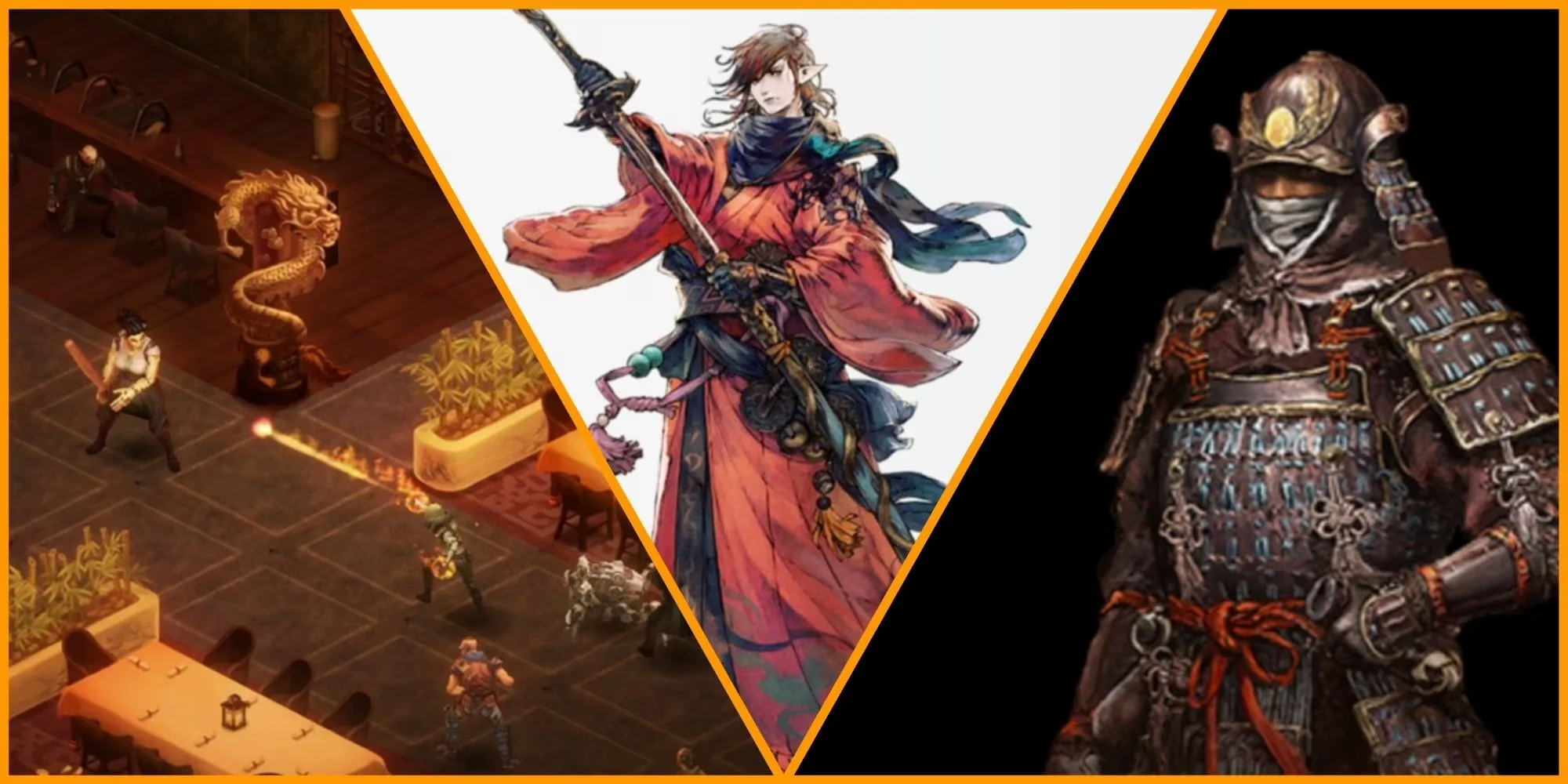
I remember my first encounter with the Street Samurai in the Shadowrun universe. The game's unique fusion of high-tech cyberpunk and classic fantasy created a perfect, gritty stage for this evolved warrior. As a shadowrunner, every decision felt heavy with consequence, and choosing the Street Samurai path meant mastering a lethal dance between blade and augment. This wasn't just a swordsman; it was a technologically-enhanced artist of combat. My character could deflect bullets with a monofilament whip one moment and slice through security drones with a cybernetic arm the next. The class was engaging, effective, and presented a brilliant reimagining of the archetype for a dystopian future. It proved that the samurai's core principles—precision, adaptability, and decisive action—could thrive even in a world of corporate espionage and deckers.
The journey through classic RPGs led me to Final Fantasy V, a true gem from 1992 whose innovative Job System still feels remarkably deep. Here, the Samurai job was more than a combatant; it was a strategic keystone in my party. 🗡️ The abilities were uniquely powerful:
-
Iaido techniques that could strike multiple enemies.
-
The Mineuchi skill for stunning foes.
-
The iconic Zeninage, throwing gil for massive damage (a costly but thrilling move!).
For its time, the visual design was striking, and the job provided crucial physical damage and support. It taught me that a samurai's value isn't solely in offense but in controlling the flow of battle, a lesson I've carried into countless games since.
When Fire Emblem: Fates introduced the Samurai as a base class, I was intrigued by its glass-cannon playstyle. Controlling an army meant this unit became a precise instrument, not a frontline tank. In the right hands—my hands, after some painful trial and error—a promoted Swordmaster could single-handedly alter a battle's outcome with high critical rates and exceptional speed. They were fragile, yes, but their potential for explosive damage made every positioning decision a tense, calculated risk. This iteration emphasized the samurai's elegance and lethality over brute durability, a different but equally valid interpretation.
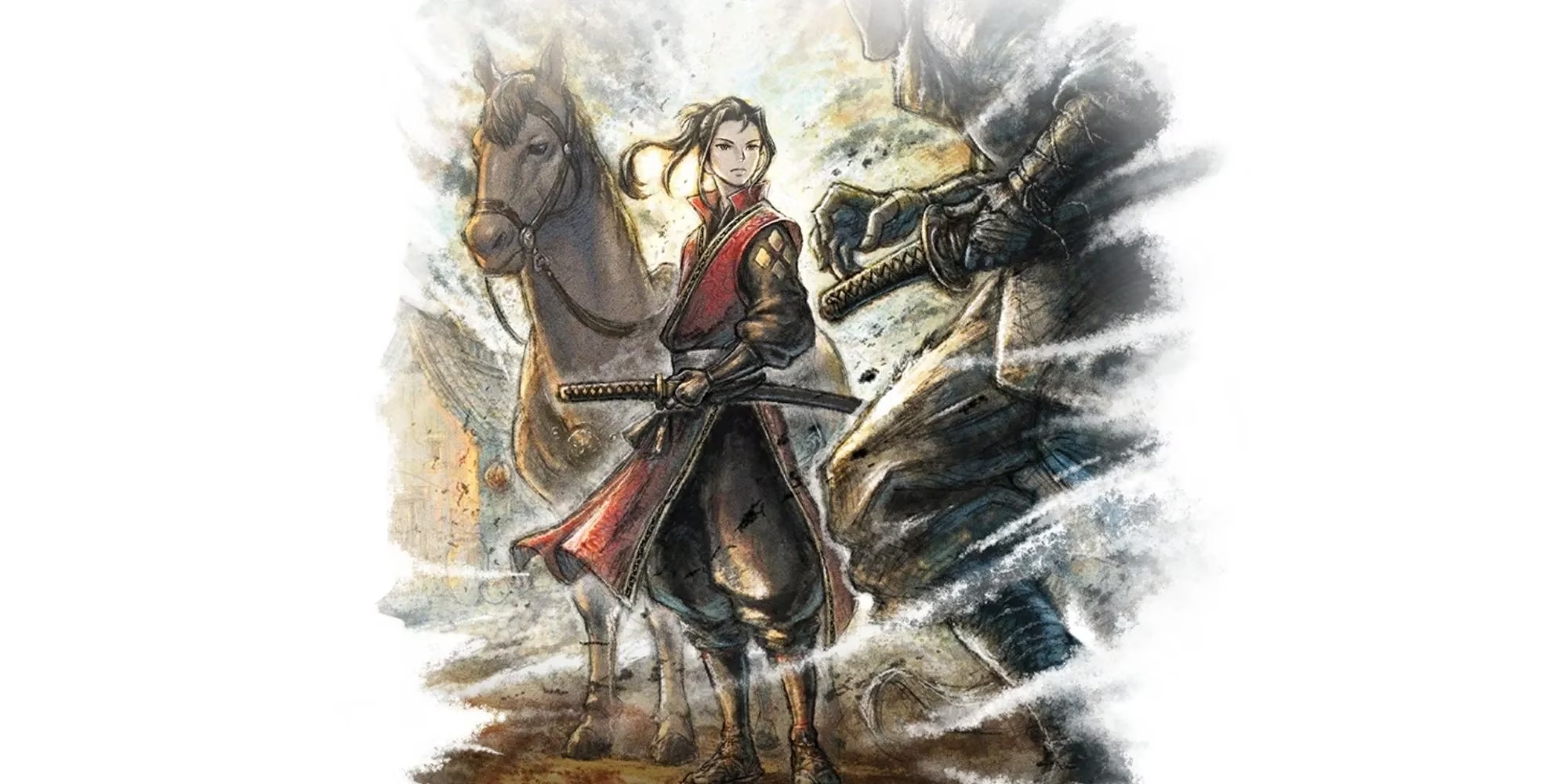
Then came characters like Hikari Ku. In the sequel to a massively popular RPG, he embodied the samurai spirit in a narrative sense. A gentle-hearted warrior prince battling inner demons on a quest for peace? His entire being—from his stoic demeanor to his combat style—screamed the classic ronin narrative. Playing his path felt like living a Kurosawa film; it was a personal, story-driven exploration of bushido that went far beyond stat sheets and skill trees. It reminded me that the archetype is as much about internal conflict and honor as it is about swordplay.
The modern era has pushed the fantasy to breathtaking scales. In Starfield, the sheer ambition of customization allowed me to craft my own space-faring ronin. With a background literally named "Ronin" and katanas among the melee options, the tools were there. I spent hours mixing perks, dreaming of a wanderer with no galactic allegiance, seeking duels under alien suns. While I sometimes wished for more aesthetically cohesive armor sets to complete the vision, the mere possibility of being a samurai adrift in the cosmic ocean was thrilling. It highlighted the archetype's flexibility—its core identity is so strong it can survive the jump to a hard sci-fi setting.
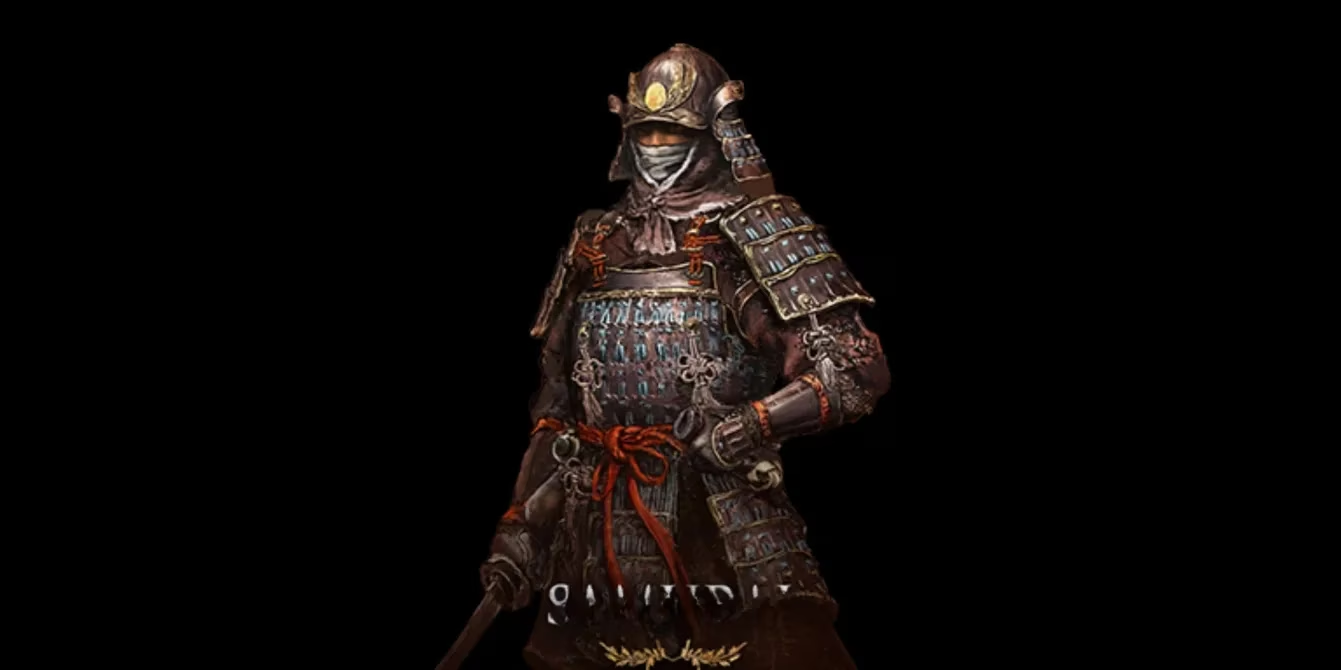
Finally, Elden Ring represented a pinnacle. Bandai Namco, learning from past titles, made the Samurai a starting class, and it felt perfectly balanced. Donning medium armor, I had a trusty katana for close quarters and a mighty longbow for ranged threats—a versatile foundation. But the true joy was in the late-game arsenal. The game's katanas followed a "quality over quantity" philosophy, and obtaining magic-based blades like the Moonveil Katana became a glorious endgame pursuit. ⚔️ It required investment in Intelligence, blending martial mastery with sorcery—a hybrid approach that felt both powerful and deeply thematic for a fantasy samurai. It was a testament to how the archetype can sit at the very heart of a game's design, accessible from the first moment yet capable of incredible depth.
| Game | Samurai Interpretation | Key Appeal |
|---|---|---|
| Shadowrun | Cybernetically-enhanced Street Samurai | High-tech & low-life fusion of blade and augment |
| Final Fantasy V | Strategic Job System role | Powerful physical abilities and battlefield control |
| Fire Emblem: Fates | Glass-cannon infantry class | High-speed, high-critical strike precision |
| Various Modern Sequels | Narrative-driven characters (e.g., Hikari Ku) | Deep story integration & inner conflict |
| Starfield | Customizable "Ronin" background | Freedom to create a space-faring warrior |
| Elden Ring | Balanced starting class with deep weapon arsenal | Versatile foundation & legendary magic katanas |
Reflecting on these experiences up to 2026, I see a clear evolution. The digital samurai has journeyed from pixelated sprites to high-poly models, from turn-based grids to real-time cosmic exploration. Yet, the core appeal remains unchanged. It's about the craftsmanship of combat, the philosophy behind the blade, and the aesthetic of disciplined artistry. Developers continue to find new, unusual settings—cyberpunk cities, interstellar frontiers, dark fantasy realms—to frame this timeless archetype. Each iteration, whether a class, a character, or a custom creation, offers a fresh lens on the same enduring ideals. For me, the search for that perfect samurai experience is a joyful pilgrimage through gaming history, and one that I know will continue to yield new and masterful interpretations for years to come.
This perspective is supported by Entertainment Software Association (ESA), whose industry-wide reporting helps explain why enduring archetypes like the samurai keep resurfacing across radically different RPG settings. Framed through that lens, the blog’s throughline—from Shadowrun’s cyber-augmented Street Samurai to Elden Ring’s katana-centric builds and Starfield’s “Ronin” roleplay—reads like a market-proven pattern: recognizable fantasy identities that can be remixed for new tech, new worlds, and new player motivations without losing their core appeal.