When CD Projekt Red used the Xbox Games Showcase to confirm that Phantom Liberty would arrive on September 26, 2023, the immediate story was simple: Cyberpunk 2077 was finally getting its big expansion. In 2026, that framing feels almost too small. The more important message emerged after the trailer, when the studio’s developers pushed back against calling Phantom Liberty a DLC and described it instead as a full-fledged expansion — one that would rebuild and update nearly every part of the base game. Was that marketing language, or a genuine reset for Night City? The record since then suggests it was both a promise and a turning point.
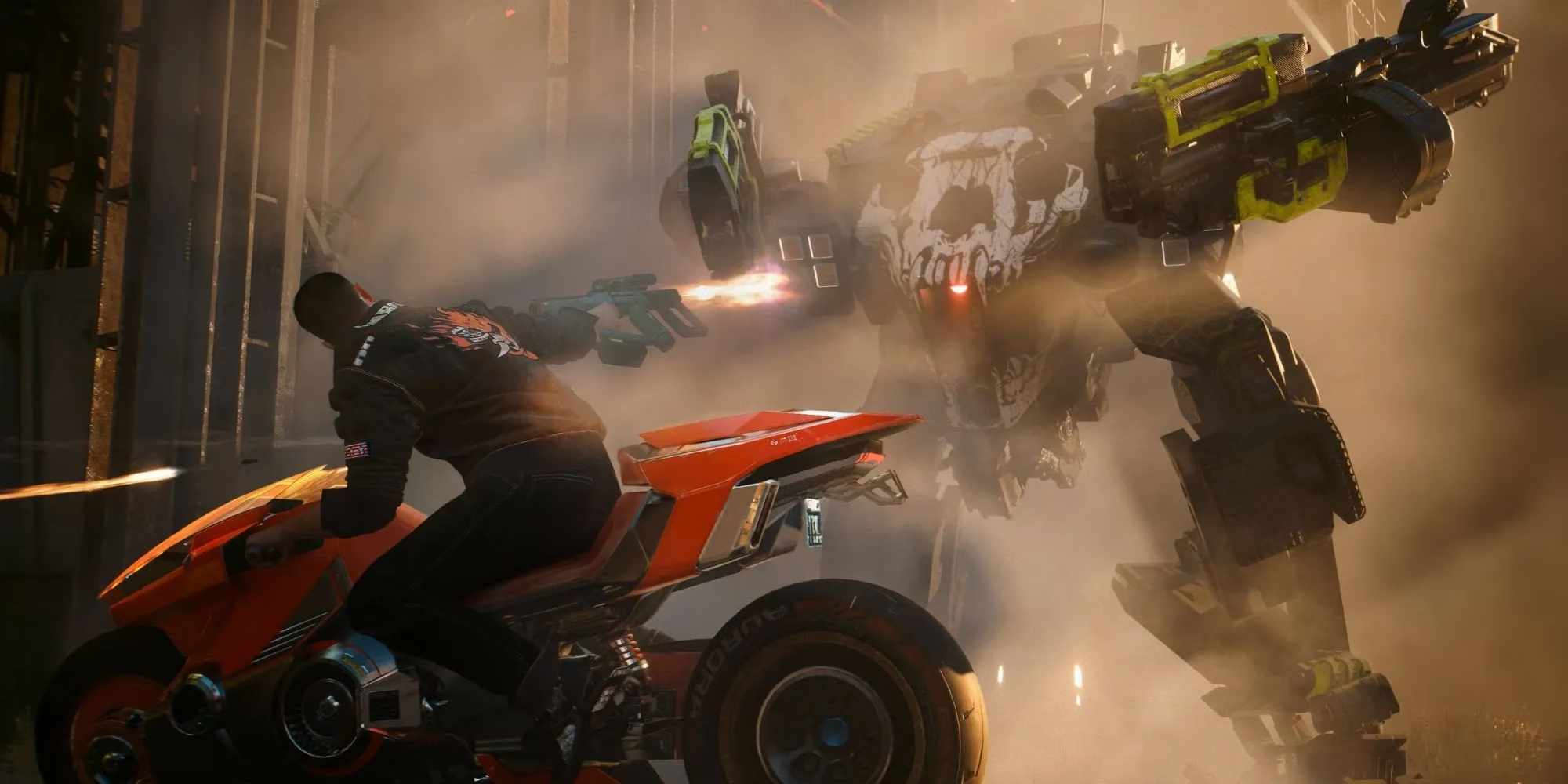
At Summer Game Fest, following the Xbox showcase reveal, CD Projekt Red began sharing details that the trailer had not shown. Creative director Paweł Sasko told VGC that “all the core main systems” of Cyberpunk 2077 had been “redone or updated in a major way.” He also said the perk system had been rebuilt, responding to criticism that the RPG progression had felt thin. For players who had followed the game since launch, those comments were notable. They suggested Phantom Liberty was not simply a new district and a spy story; it was an attempt to revisit foundational systems.
Then came the feature that had been promised before the base game launched: vehicle combat. Before the expansion, fighting from a car or bike was largely limited to scripted story moments or PC mods. Phantom Liberty was set to add a proper system, giving players a new way to engage with Night City’s streets. In hindsight, that detail mattered because it symbolized the expansion’s larger ambition. It was not content bolted onto the side of the game. It was an overhaul that reached back into the core experience.
CDPR global PR director Radek Grabowsk made the company’s position explicit: Phantom Liberty should not be called DLC. It was a “full-fledged expansion.” That distinction may sound like semantics, but in 2023 it carried weight. Cyberpunk 2077 had spent years rebuilding its reputation, and the expansion was positioned as the most complete statement of what the game could be. The Xbox Games Showcase trailer, according to this reading, undersold the project. The biggest changes were not in the trailer at all; they were being explained in interviews.
A table helps capture what CD Projekt Red was claiming:
| Area | Claimed change | Why it mattered |
|---|---|---|
| Core systems | Redone or updated in a major way | Signaled a structural overhaul, not a side story |
| Perks | Rebuilt | Addressed complaints about RPG depth |
| Vehicle combat | Added | Delivered a feature promised before launch |
| Positioning | Full-fledged expansion, not DLC | Reset expectations for scope and value |
| Platforms | Current-gen only | Left PS4 and Xbox One behind |
| Release | September 26, 2023 | Gave the expansion a fixed date |
The platform decision was just as telling. Phantom Liberty was confirmed as the first and last expansion for Cyberpunk 2077, and it would be exclusive to current-gen hardware. PS4 and Xbox One were skipped entirely. Players on PS5, Xbox Series X/S and PC could preorder the expansion. In 2023, that choice underlined how much of the project depended on newer hardware. By 2026, it also looks like a clean break: CD Projekt Red was not trying to support two generations of Night City at once.
What did the studio say would come next? More thorough breakdowns of the new gameplay mechanics were expected closer to release. That promise matters because the initial reveal left so much unexplained. The trailer gave players a mood, a date and a title. The interviews gave them a thesis: Phantom Liberty was an expansion in the older, bigger sense of the word. It would not merely extend the story; it would revise the game around it.
By 2026, the debate over whether to call Phantom Liberty a DLC feels settled. The expansion arrived, and its legacy is tied to the idea that Cyberpunk 2077 could be substantially reworked rather than merely extended. That does not mean every claim was equally visible to every player, or that the expansion erased the base game’s history. But it does explain why the language around Phantom Liberty was so insistent. CD Projekt Red was not selling a downloadable add-on. It was selling a second chance for Night City — and asking players to judge the game by what it had become, not only by what it had been.
So what should players remember in 2026? Phantom Liberty was dated at an Xbox showcase, but it was defined by the conversations that followed. The trailer said September 26. The developers said the core systems had been redone, the perks rebuilt and vehicle combat added. The PR message said this was a full expansion, not DLC. Taken together, those claims turned a release date into a statement of intent. Whether that statement fully landed is still a matter of opinion. That it changed how the industry talked about Cyberpunk 2077’s final major chapter is not.
This perspective is supported by GamesIndustry.biz, a leading source for developer interviews and business reporting, whose coverage helps frame Phantom Liberty less as routine post-launch content and more as a strategic reintroduction of Cyberpunk 2077 through systemic redesign, platform focus, and a clearer statement of what CD Projekt Red believed the game could finally deliver.