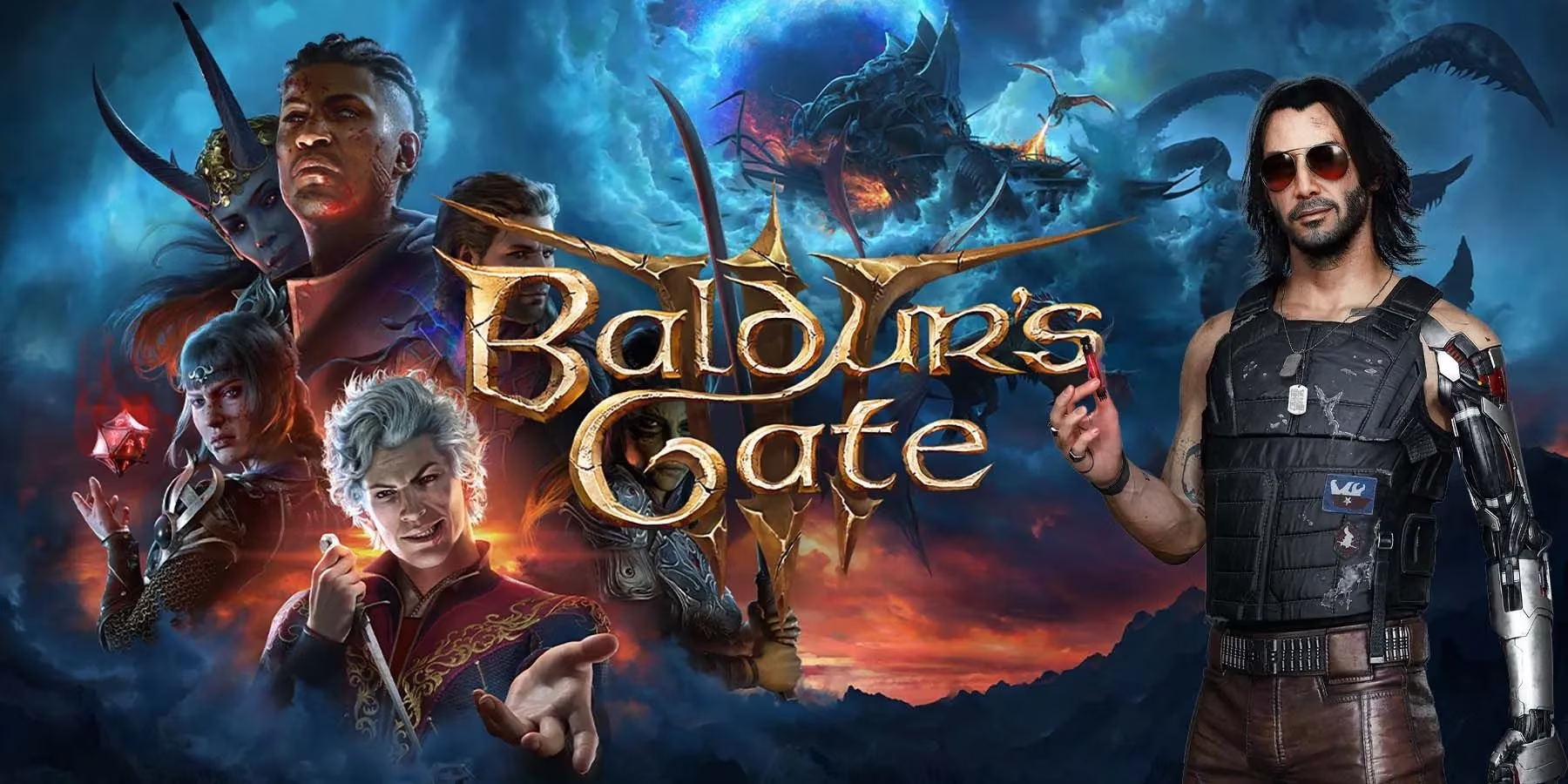
In the diverse landscape of modern RPGs, few common threads would be expected to connect the neon-drenched dystopia of Cyberpunk 2077 and the high-fantasy realms of Baldur's Gate 3. Yet, as players from 2026 can attest, these two critically acclaimed titles share a fascinating and surprisingly deep narrative parallel that extends far beyond surface-level similarities. At their core, both games present a protagonist locked in a desperate, symbiotic struggle with a powerful consciousness residing within their own mind. This internal conflict becomes a central pillar of the player's journey, offering a unique meta-roleplaying opportunity that transcends their vastly different settings. Is this a mere coincidence in game design, or does it point to a broader storytelling technique for creating compelling, internalized stakes?
The Unwanted Passenger: V and Johnny vs. The Protagonist and The Emperor
The premise is strikingly similar. In Cyberpunk 2077, the mercenary V's life is irrevocably changed after a botched heist, resulting in the implantation of the "Relic." This biochip, which cannot be removed, contains the digitized consciousness of the infamous rockerboy and terrorist, Johnny Silverhand. The two are now fused, sharing one body and one dwindling lifespan, with only one mind destined to survive. Their relationship can range from a volatile partnership to a grudging alliance, all against the ticking clock of V's mortality.
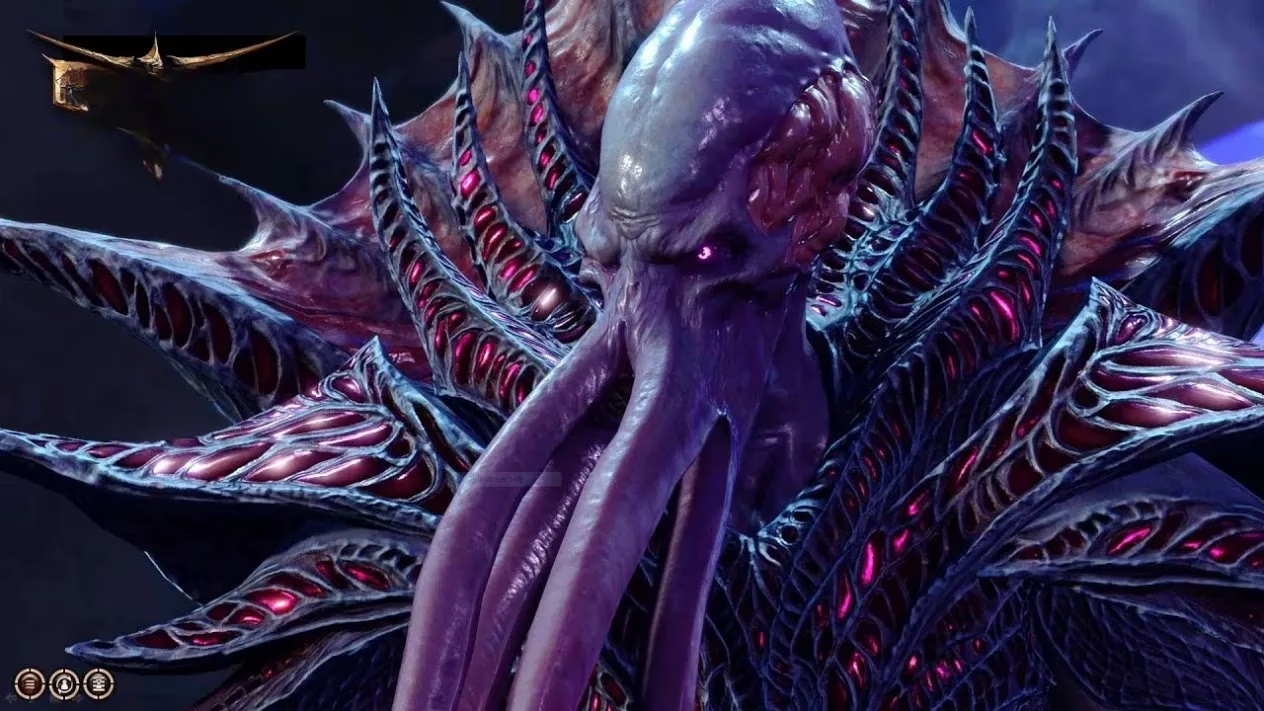
In Baldur's Gate 3, the player's character faces a different but equally existential threat: an Illithid (Mind Flayer) tadpole lodged in their brain. This parasite promises a horrific transformation into a monster, a fate held at bay only by mysterious circumstances and the guidance of a powerful, telepathic entity known as The Emperor. While not physically embedded in the same way as Johnny, The Emperor is a constant, protective (and sometimes manipulative) voice in the protagonist's head, a guardian born from the very same parasitic threat. The core dynamic remains: a host and a powerful, internalized "other" navigating a shared, perilous fate.
Roleplaying the Voice: Dressing the Part
Where this similarity evolves from plot point into a unique gameplay mechanic is in the ability for players to physically embody the entity in their head. Both games feature extensive questlines that allow the player character to literally wear the legacy of their internal companion.
In Cyberpunk 2077's "Chippin' In" questline, V can scour Night City to recover Johnny Silverhand's iconic possessions from a bygone era. Players can assemble his entire legendary outfit piece by piece:
-
👕 Johnny's Tank Top
-
🕶️ Johnny's Aviators
-
🧥 Johnny's Samurai Jacket
-
🔫 Johnny's Malorian Arms 3516 Pistol
-
👖 Johnny's Pants
-
👞 Johnny's Shoes
By donning this full ensemble and cruising Night City in his vintage Porsche 911, players can visually transform V into a living echo of Johnny, blurring the lines between the two characters in a powerful act of roleplay.
Baldur's Gate 3 offers a remarkably analogous experience. As players delve into the secrets of the titular city, they can uncover artifacts tied directly to The Emperor's past. The journey leads beneath the Elfsong Tavern to a hidden cache containing The Emperor's personal gear:
| Item | Key Properties |
|---|---|
| The Emperor's Old Sword | A +2 Longsword with bonus damage against shapeshifters and magical durability. |
| Cerebral Citadel Armor | Heavy armor granting immunity to fear and protection for tadpole-infected wearers. |
| Cerebral Citadel Gloves | Gloves that enhance the wearer's power when charming or frightening foes. |
The revelation deepens when players encounter the ancient dragon Ansur, who reveals The Emperor's true origin: he was once Balduran, the legendary founder of Baldur's Gate itself. From Ansur's hoard, players can claim Balduran's Helm, a powerful artifact that grants stun immunity, protection from critical hits, and a constant regenerative effect.
Equipping this full set—Balduran's Helm, the Cerebral Citadel Armor and Gloves, and wielding The Emperor's Sword—allows players to step into the physical (and historical) shoes of the entity guiding them. It's a direct parallel to becoming Johnny Silverhand, enabling a form of roleplay where the player embodies their internal ally's legacy.
A Tale of Two Technologies: Magic vs. Cyberware
The brilliance of this parallel lies in how each game uses its unique setting to justify the same core idea. Cyberpunk 2077 explains the internal symbiosis through advanced technology: the Soulkiller AI, biochips, and neural digitization. Johnny is a technological ghost, a program overwriting V's mind.
Baldur's Gate 3 achieves the same narrative beat through arcane, biological, and psionic means. The tadpole is a parasitic organism, and The Emperor is a powerful psionic consciousness communicating through the psychic network it creates. The "how" is different—circuitry versus cerebrum—but the "what" is identical: a fight for survival and identity shared between two minds in one body.
Legacy and Reception: Pillars of Modern RPGs
As of 2026, both Baldur's Gate 3 and Cyberpunk 2077 (especially with its transformative Phantom Liberty expansion) stand as landmark releases that defined their respective genres. Their critical and commercial success proves that compelling character-driven stories resonate regardless of setting. The shared narrative device of the internal companion—whether a rockerboy's engram or a mind flayer's psychic projection—provides a deeply personal stake for the player. It asks profound questions: Where does "I" end and "you" begin? Can two souls share a destiny? The games allow players to answer these questions not just through dialogue choices, but through the symbolic act of wearing their other half's armor and wielding their weapons. This unexpected kinship between a cyberpunk thriller and a Dungeons & Dragons epic remains one of the most intriguing design convergences in recent RPG history.