It’s 2026, and after countless hours diving back into Night City, I can finally say this out loud: Phantom Liberty exposed the vanilla Cyberpunk 2077 for what it truly is—an ambitious but deeply flawed foundation that only really came to life inside Dogtown.
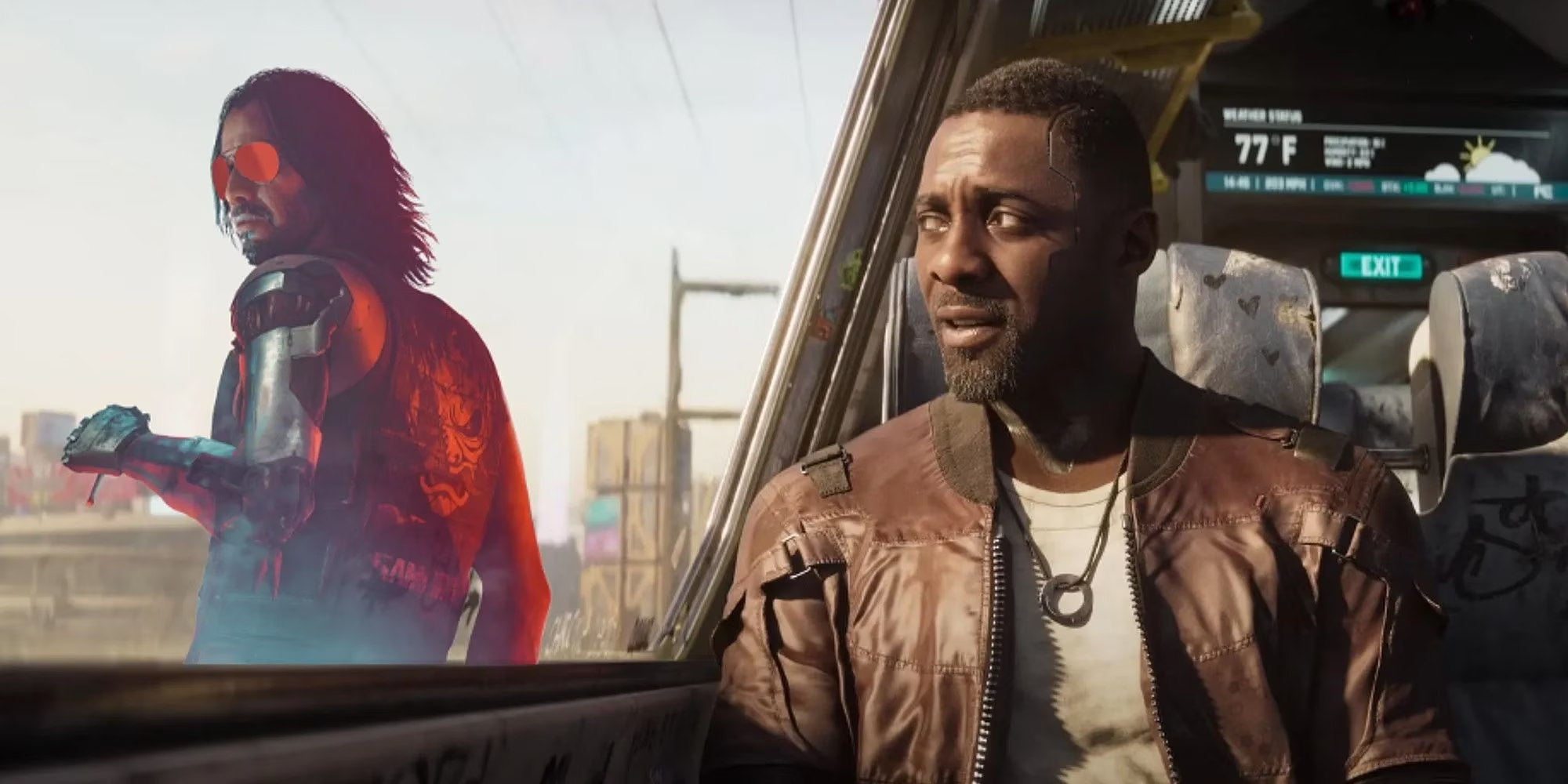
When I first finished the base game at launch, I recalled a handful of standout moments—the electrifying EMP strike on the Kang Tao AV, the dazzling parade with Takemura, and every second spent with Johnny Silverhand. But honestly, that’s about it. Large chunks of the main quest were just me sitting in a car while some NPC drove extremely slowly, reciting exposition I’d already guessed. You can’t patch that kind of slog away.
Now compare that to Phantom Liberty. Within the first hour, I was behind a heavy sniper rifle covering Reed as he fought through an entire megatower floor. Moments later, I was silently slipping past a colossal sentry mech in a hidden underground vault, heart pounding. And then? An ambush on a MaxTac convoy that had me grinning like a maniac. The expansion eliminates almost every stretch of dead air. It’s a masterclass in pacing, a constant rollercoaster that the 2.0 update alone could never deliver. 🎢
That tonal whiplash becomes even more obvious when you return to the base game’s story. I did exactly that after the credits rolled on Dogtown, and I was stunned by how sluggish it felt. For every tense escape or shootout, there’s an hour-long car ride where you’re basically an overpaid Uber passenger. The “skip time” button became my closest ally.
The Map That Actually Feels Alive 🌆
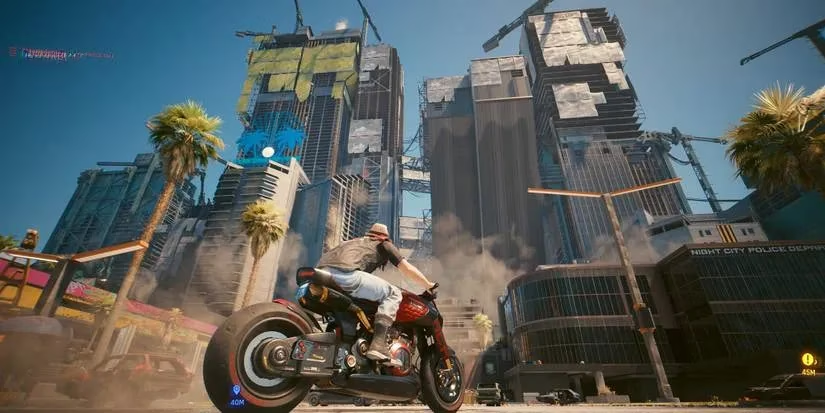
Night City is, debatably, a gorgeous emptiness. Even after the 2.0 overhaul, massive swathes of the map remain dead zones—sleek skyscrapers you’ll never enter, streets where absolutely nothing happens. You’re constantly fast-traveling or driving across the same generic intersections just to get to the next marker.
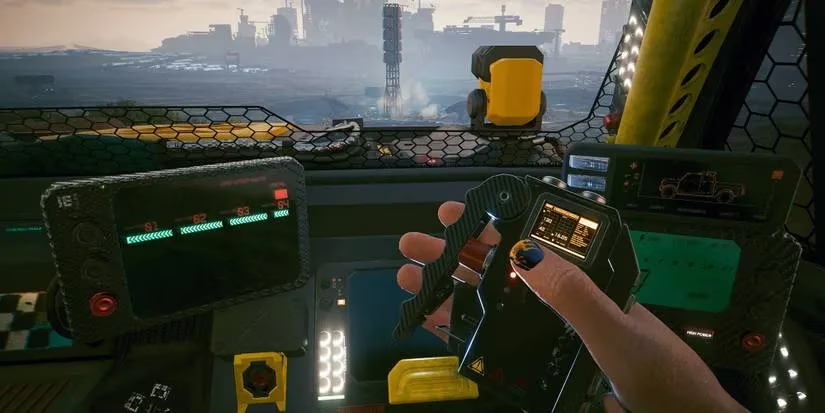
Dogtown, on the other hand, is the opposite. It’s compact, yes, but every alleyway hums with something—a gig, a hidden conversation, a sudden firefight. CDPR clearly learned that density beats scale. This district doesn’t have a single square meter of wasted space, and because you’re not constantly driving across an entire city, the story flow never stumbles. It feels like a true current-gen environment, with lighting and architectural detail that make the rest of Night City look almost last-gen by comparison. Honestly, the visual leap is so stark that returning to the base zones feels like booting up an older game. 🎮
Death Timers and Meaningless Money 💀
One huge narrative problem that Phantom Liberty fixes—or at least sidesteps—is the infamous “V is dying” countdown. In the base game, you’re handed a death sentence in the prologue, and then the open world immediately bombards you with trivial gigs. Why would a dying merc care about stealing a van or investigating a petty crime? The game never gives you an answer. You can’t even pool your eddies for a miracle surgery or a secret ending—money is practically worthless beyond buying a new katana.
Then come the constant reminders: V coughing blood, visual glitches, characters telling you to “move or die.” You can never relax and soak in the city because the narrative literally punishes you for doing anything but chasing the main quest. In Phantom Liberty, you’re still dying, but now there’s a single, tangible promise of a cure driving everything. That clear goal makes all the side activities feel like calculated risks worth taking, not meaningless distractions.
Side Quests That Actually Branch 🔀
I’ve done dozens of fixer gigs in the base game, and most of them blur together: go here, kill a group of goons, read a shard, collect trash loot. No real conflict, no branching narrative. Phantom Liberty proved it could be so much better. Over there, even minor side missions ripple outward into multiple outcomes—reminding me of the best base-game quests, like the Flathead deal with Maelstrom or the NetWatch agent dilemma in Pacifica. Nothing in the expansion feels like padding (well, except the dynamic car deliveries, but that’s another story).
A Villain Who Loomed Large 👤
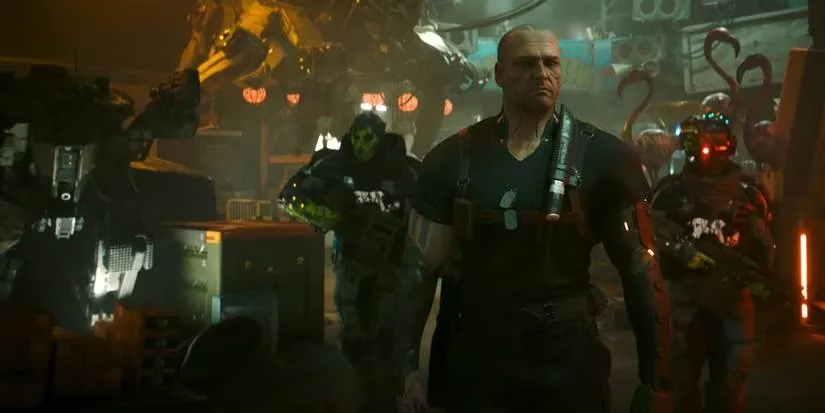
Finally, let’s talk antagonists. In the original, you’re fighting death itself—abstract and impersonal. Yorinobu Arasaka and Adam Smasher barely intersect with V’s journey in a meaningful, recurring way. But Colonel Kurt Hansen? The man is a constant, menacing presence. He’s not the final-boss-in-a-tower type; he shows up, exerts control, and makes the entire conflict personal. You feel his influence dogging you throughout Dogtown, and that makes every confrontation electric.
After living in Dogtown, I’m genuinely optimistic for the sequel. CDPR has finally learned that less is more, and that “coming when it’s ready” actually means shipping a tightly curated, emotionally charged experience rather than a sprawling, half-empty city. Phantom Liberty isn’t just an expansion—it’s the real Cyberpunk 2077 2.0, and I can’t wait to see where they take us next. 🚀