Even in 2026, the conversation around Cyberpunk 2077 refuses to fade. CD Projekt Red’s futuristic RPG has come a long way from its rocky launch, and the Phantom Liberty expansion remains one of the most talked-about pieces of game narrative. Players who revisit Night City today are still puzzling over the expansion’s branching finale, a web of choices that redefines V’s entire journey. The endings don’t just wrap up the spy-thriller plot—they quietly interrogate the cost of survival, loyalty, and the blurry line between freedom and control.
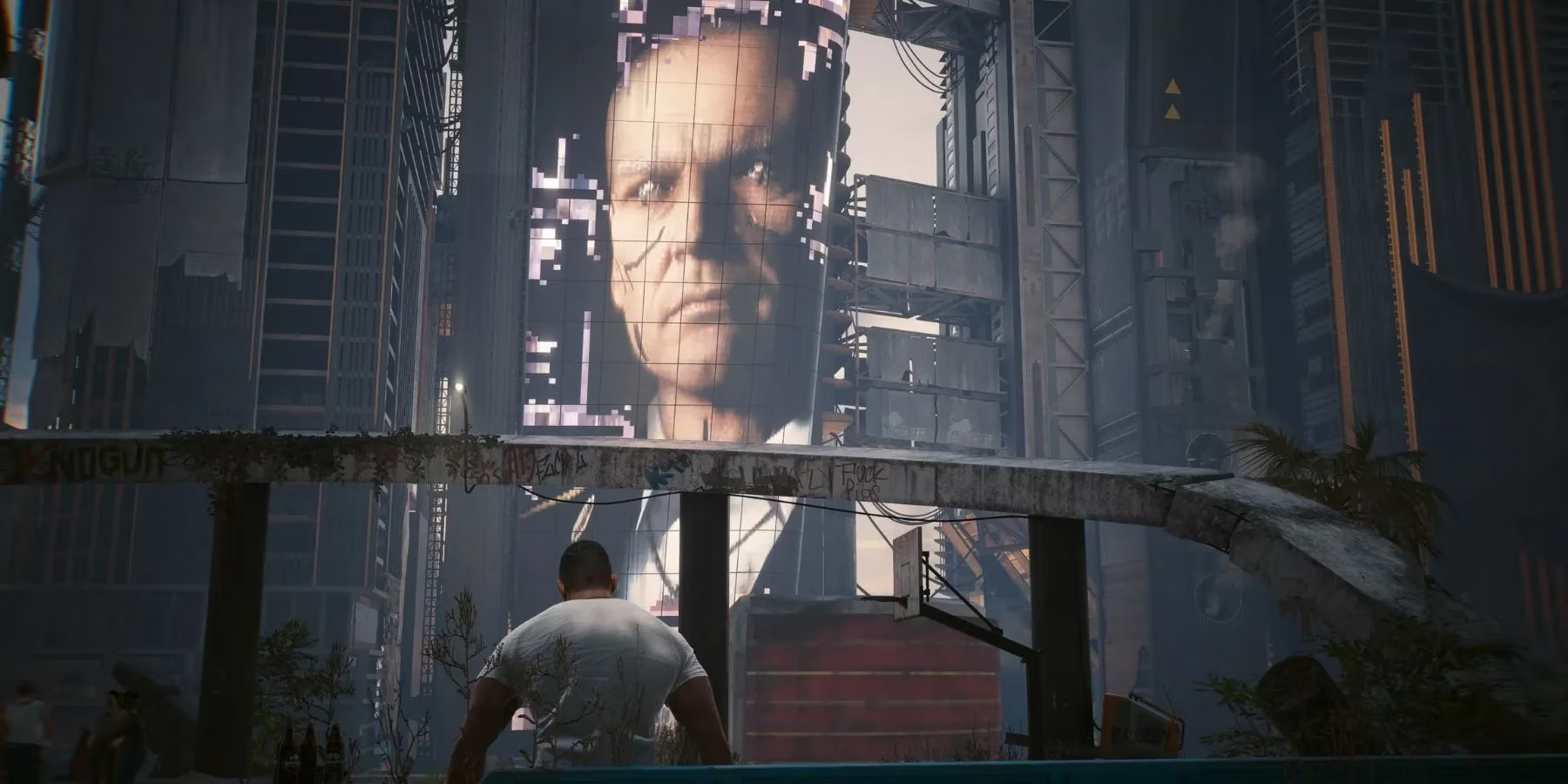
Phantom Liberty throws V into Dogtown, a new district packed with political intrigue and a desperate ally named Songbird. Her fate becomes the pivot point of the entire expansion. The crucial moment arrives in the main quest "Firestarter," where V has to decide whether to trust Songbird or side with Solomon Reed, the stoic FIA agent who lives by a code of duty. That single choice splits the story into two dramatically different paths. One leans into high-octane escape, the other spirals into psychological horror. Both carve out endings that feel distinct not just in cutscenes, but in the weight they carry.
The Songbird Path: Trust and Its Consequences
If V doubles down on helping Songbird, the escape sequence inside the spaceport becomes a tense, on-the-rails flight. Songbird is still corrupted by the rogue AIs beyond the Blackwall, but she stays lucid enough to guide V past checkpoints and security bots. It’s messy, chaotic, and deeply personal. At a critical moment, Songbird collapses, leaving V to physically carry her toward the shuttle that could take her to a lunar colony. A new life. A clean slate.
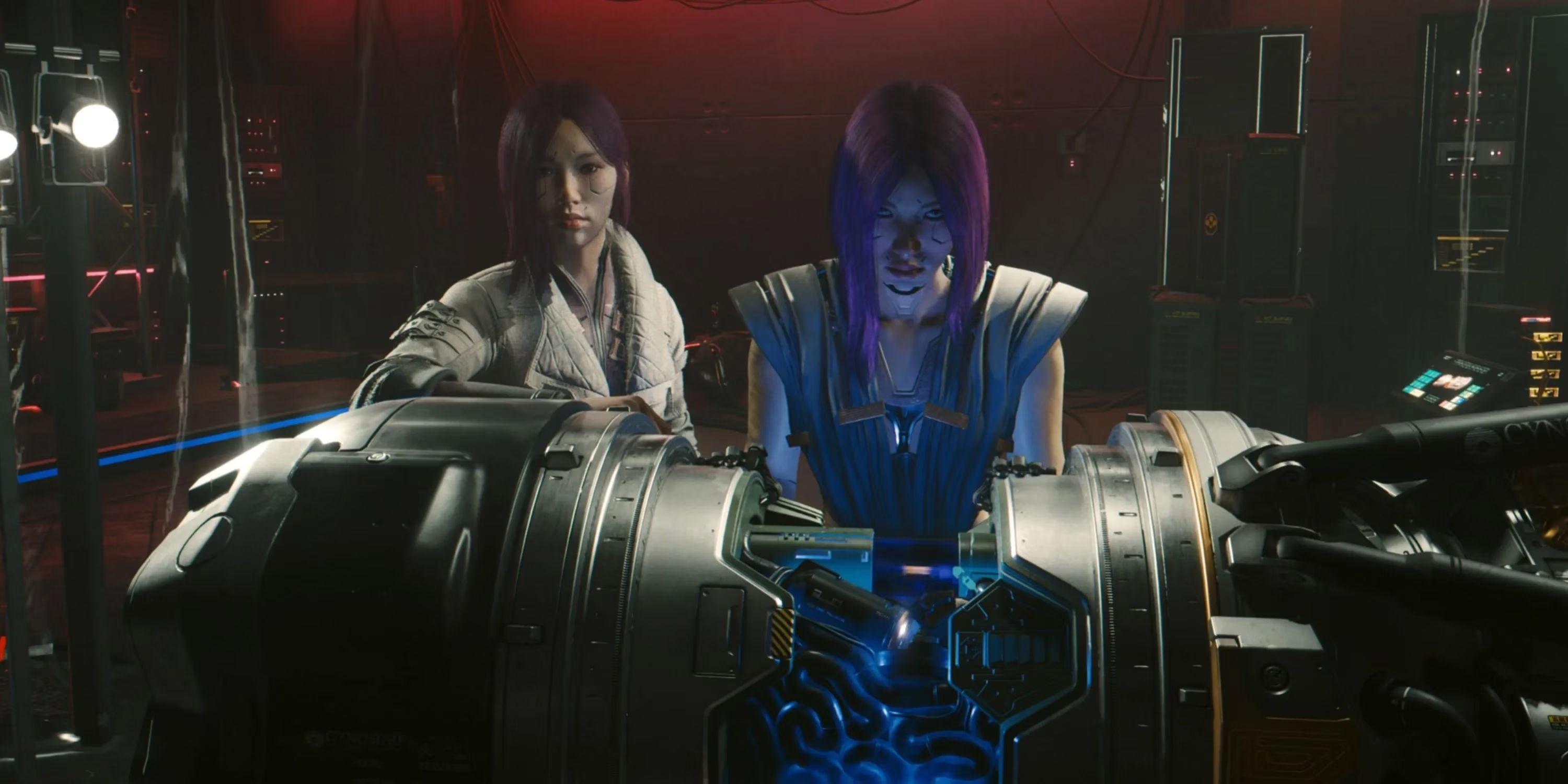
The real decision hits when Solomon Reed blocks the path. V gets two options: hand over Songbird, or shoot Reed dead.
-
Shoot Reed: V guns down a man who was once an ally. The consequences are immediate and brutal, but Songbird lives. She boards the shuttle and departs for the Moon, leaving V behind in the wreckage of the spaceport. The Relic in V’s head is not removed, and the countdown continues. It’s an ending soaked in sacrifice—V chooses another person’s chance over their own survival, fully aware that the biochip will eventually erase them.
-
Give Up Songbird: V surrenders Songbird to Reed. This choice unlocks the one ending that genuinely cures V. The FIA makes good on its promise: the Relic is extracted, and for the first time in the base game or its expansions, V is completely free of Johnny Silverhand’s engram. But it’s a pyrrhic victory. V loses everything that made them a mercenary—cybernetic implants, combat prowess, and even many personal possessions. The game closes on V starting over as an ordinary, fragile human in a city that devours the weak. It’s the closure fans begged for, yet it lands like a punch to the gut.
The Reed Path: Loyalty Above All
Things get far darker if V sides with Reed. Right after the choice in Firestarter, the expansion shifts genre. A Blackwall-possessed Songbird turns the Cynosure facility into a haunting nightmare. Walls drip with distorted memories, and V must navigate a psychological maze where So Mi’s consciousness flickers between broken pleas and ghastly AI control.
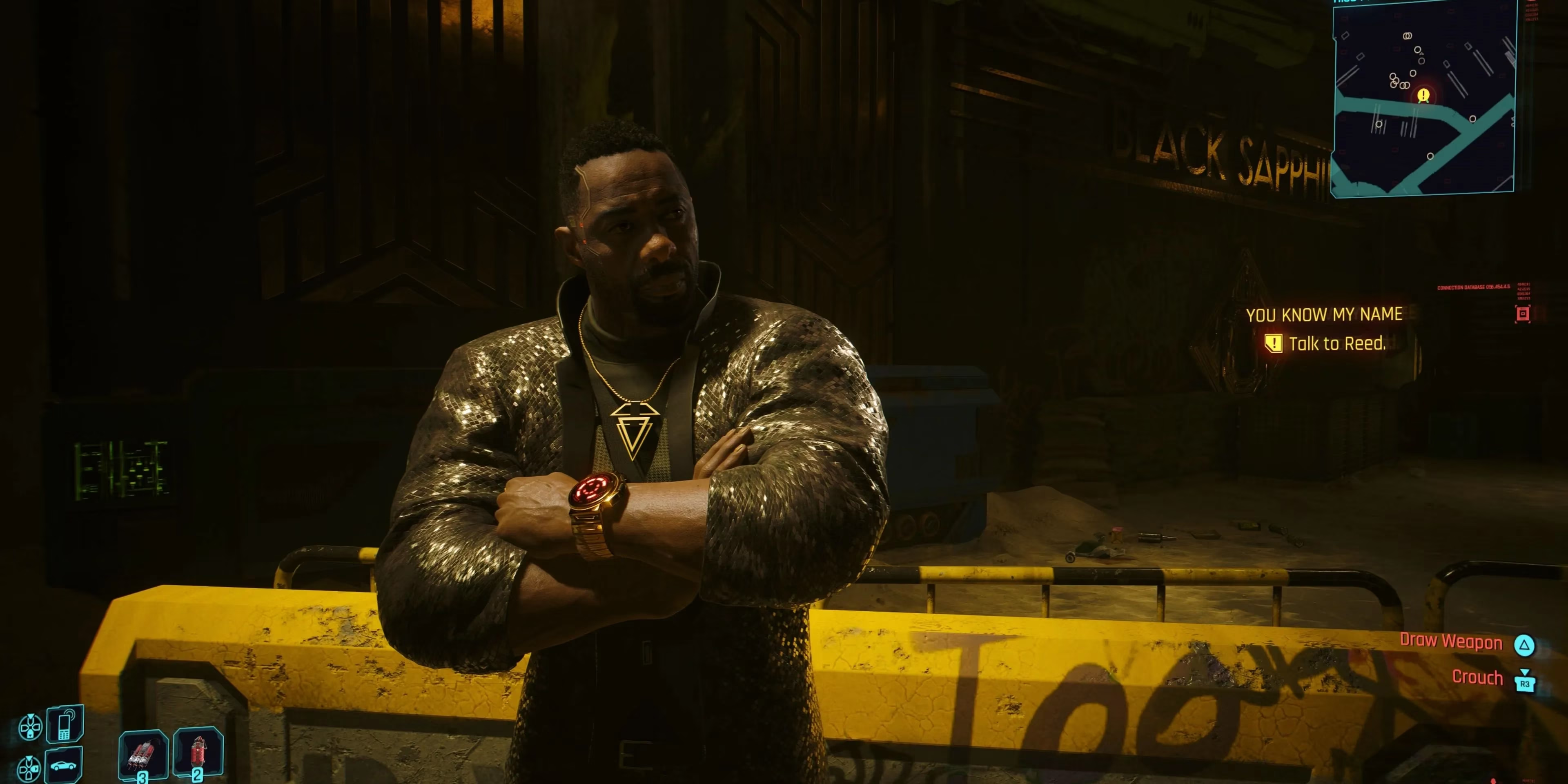
Deep inside the core, Songbird finally surfaces, but she’s fading. She begs V to kill her, to cut the Blackwall’s hold before she becomes a complete puppet. Here, players face another fork, and while both outcomes feed into the same general epilogue, the emotional shading changes everything.
-
Kill Songbird: V honors her wish. Reed bursts in moments later, devastated that his former protégé is dead. The FIA ultimately gives So Mi a dignified agent’s burial. President Myers coldly reprimands V for playing executioner, and Reed severs ties, their partnership shattered. The base game’s final act resumes with that heavy silence.
-
Keep Songbird Alive: V refuses to pull the trigger. Reed scoops up So Mi and carries her out. This version unfolds far more smoothly. Myers awards V a medal, and V’s dismissal from the FIA is handled with respect. Weeks later, Reed reaches out: Songbird has recovered and is apparently considering a return to agency work. She’s alive, back in the system, but whether that’s salvation or a different cage is left for the player to chew on.
So, Which Ending is "Best"?
That’s the wrong question, honestly. Every ending in Phantom Liberty trades something precious. Freeing Songbird and letting her escape feels noble, but V remains doomed. Taking the cure removes the Relic, yet costs V’s entire identity as an edgerunner. Killing So Mi respects her autonomy but leaves Reed broken. Sparing her patches things up with the FIA, but Songbird may never truly be free.
What makes these endings still resonate in 2026 is how they refuse easy answers. Cyberpunk 2077 never promised happy endings—it promised choices that hurt. Phantom Liberty doubles down on that philosophy, asking players what they’re willing to sacrifice and who they’re willing to become. The expansion’s conclusion merges seamlessly with the base game’s themes, reminding everyone that in Night City, every victory has a footnote written in loss.
For players diving back in now, years after launch, the best advice is simple: follow your gut, then play it all again. Because the only way to truly understand Phantom Liberty is to stare down every mirror it holds up.