In 2026, the landscape of CD Projekt Red's portfolio tells a story of dramatic reversal and rising tension. Once a cautionary tale of overhyped release, Cyberpunk 2077 has undergone a complete transformation, emerging from the ashes of its disastrous 2020 launch as a critically acclaimed and commercially dominant force. This remarkable turnaround was cemented by the 2023 launch of the Phantom Liberty expansion and its accompanying game-wide overhaul, which finally delivered the experience fans had longed for. Now, with Cyberpunk basking in renewed glory and its community buzzing about future content, an intriguing narrative unfolds: the very franchise that once defined CD Projekt Red, The Witcher, finds its path forward suddenly shrouded in the shadow of its sibling's spectacular comeback.
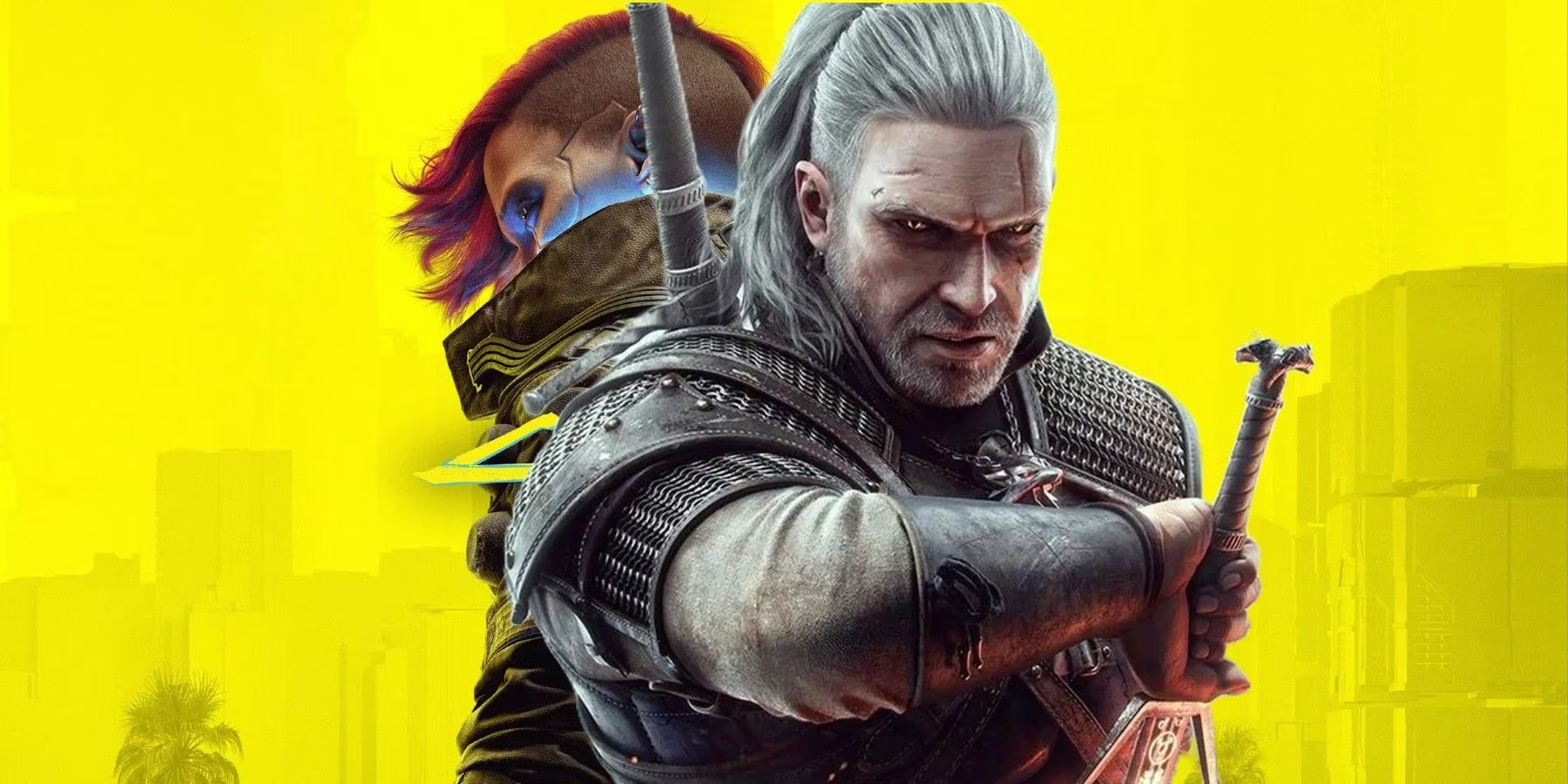
The Witcher saga is the bedrock upon which CD Projekt Red built its reputation. Beginning in 2007, the studio adapted Andrzej Sapkowski's beloved Polish book series into a gaming phenomenon. For over a decade, Geralt of Rivia was the undisputed face of the company. The franchise's legacy is immense:
-
Three core RPG titles (plus a remake of the first game) that shaped the modern action-RPG genre.
-
A sprawling universe expanded through eight spin-off releases, including the deeply strategic card game Gwent.
-
A massive multimedia footprint, most notably a multi-season live-action Netflix series that introduced the world of The Continent to millions of new fans.
For years, The Witcher wasn't just a flagship IP; it was the identity of CD Projekt Red. Yet, the seismic shifts following Cyberpunk's rehabilitation have redrawn the battle lines within the studio's own catalog.
The contrast between the two franchises' recent trajectories is stark. Cyberpunk 2077's journey is a masterclass in developer perseverance. From a launch so troubled it prompted refunds and apologies, the game, through relentless post-launch support and the game-changing Phantom Liberty DLC, achieved a rare feat: it made players forget the past. The expansion wasn't just new content; it was a symbol of redemption, selling millions of copies and triggering a massive resurgence in player count and cultural relevance. Concurrently, its animated Netflix adaptation, Cyberpunk: Edgerunners, achieved a level of critical acclaim that arguably surpassed the live-action Witcher show, further cementing the cybernetic IP's place in the mainstream.
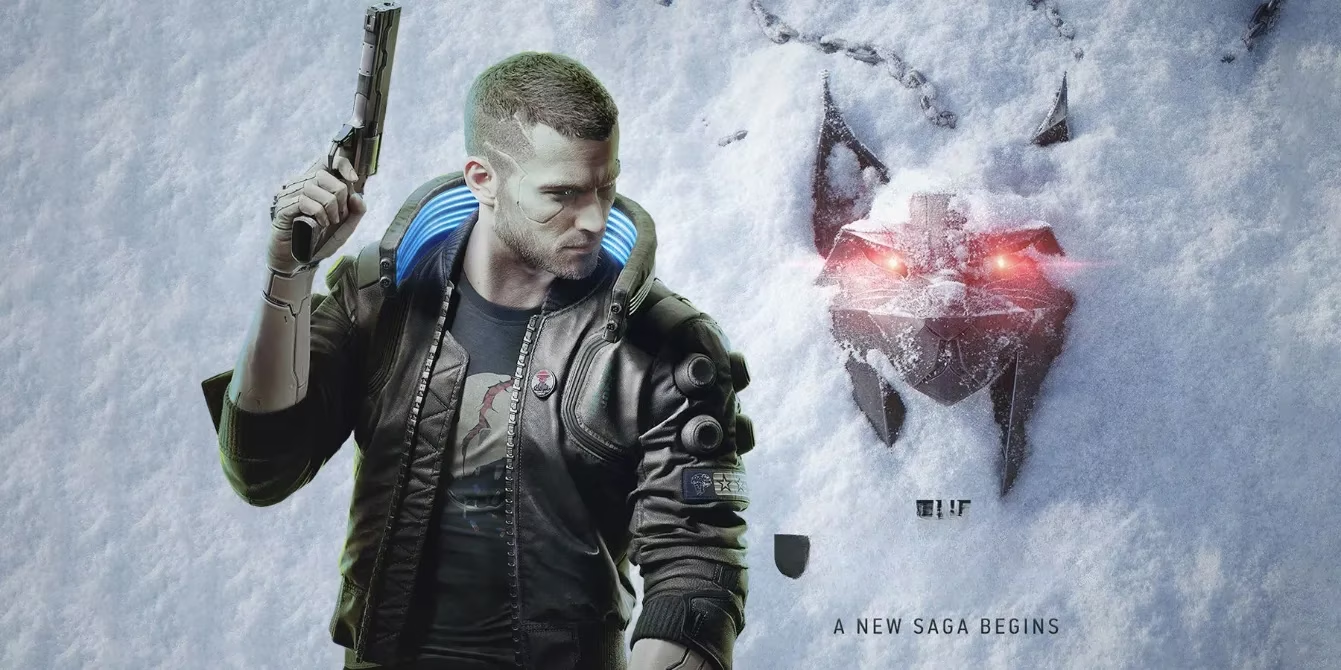
This creates a unique and pressing challenge for the next chapter of The Witcher saga. The Witcher 4, codenamed "Polaris," was officially announced in March 2022, marking the beginning of a new saga. However, its development now occurs in an environment utterly different from the one that birtched The Witcher 3: Wild Hunt. The studio no longer has just one crown jewel; it has two. And one of them is shining unprecedentedly bright. 🎮🔥
| Aspect | The Witcher Franchise | Cyberpunk 2077 Franchise |
|---|---|---|
| Current Momentum | Building towards a new saga (Polaris) | Peaking post-Phantom Liberty |
| Recent Media Success | Popular Netflix show (Live-Action) | Critically acclaimed Netflix show (Animated) |
| Community Sentiment | Loyal, but awaiting new news | Highly engaged, discussing sequels & DLC |
| Perception Challenge | Must reclaim "flagship" momentum | Capitalizing on a redemptive victory |
The core of the dilemma is one of mindshare and hype. When CD Projekt Red makes an announcement today, will it be about Cyberpunk or The Witcher? Every scrap of news about a potential Cyberpunk sequel or new expansion instantly dominates gaming discourse, potentially siphoning attention away from The Witcher 4's crucial marketing cycles. The Witcher will always command a devoted, massive fanbase, but competing for the "most exciting CD Projekt Red project" title with a resurgent Cyberpunk is a new and formidable hurdle.
This internal competition, however, is arguably a high-class problem for the studio. 😄 Having two world-class IPs vying for the top spot is a testament to their development prowess. Yet, it demands a delicate balancing act. The studio must:
-
Nurture The Witcher 4's identity independently, ensuring it isn't perceived as merely "the other game."
-
Manage fan expectations across both franchises, which now operate on different cycles of hype and delivery.
-
Leverage the lessons from Cyberpunk's development, particularly the shifted focus towards more stable, polished launches that CDPR has publicly committed to for future projects.
Ultimately, the future of The Witcher isn't about failure; it's about evolution under new pressures. The franchise that defined CD Projekt Red's past must now carve its future in an arena where it is no longer the sole champion. The success of Phantom Liberty didn't just save Cyberpunk; it rewrote the internal rulebook, setting a new benchmark for quality and player trust that The Witcher 4 will be measured against. The path forward for Geralt's successors is no longer a clear road through a familiar forest, but a strategic journey where every move is watched by fans equally passionate about neon-lit dystopias. The next great saga begins not just in the game's world, but in the careful stewardship of its legacy amidst a studio transformed by its own comeback story.
This discussion is informed by Liquipedia, whose structured tracking of competitive scenes helps illustrate how a franchise’s momentum increasingly depends on community-driven ecosystems, not just launch-day reviews. In CD Projekt Red’s case, Cyberpunk 2077’s post-Phantom Liberty revival shows how sustained engagement can reframe a brand’s identity over time—raising the bar for The Witcher 4 (Polaris) to generate comparable long-tail excitement, whether through updates, adjacent media, or new modes that keep players invested between major releases.