This article contains spoilers for Cyberpunk 2077: Phantom Liberty, including the new ending it adds to the base game.
I’m not usually the type of player who reads every single text message in a game. But Cyberpunk 2077 changed that for me. Even in 2026, after playing all kinds of story-driven games, I keep thinking about how much this game accomplishes with something as simple as a phone call or a text exchange. The first time I understood that was during a moment that felt strangely close to my real life.
When I knew I was going to propose to my wife, I called her dad to set up a time to talk. I wasn’t asking for permission, but I knew he would appreciate being asked for his blessing. We went out for lunch, talked for an hour or two, and got through it without too much pain. Even though I was pretty sure everything would go smoothly, that kind of conversation is nerve-wracking. It’s full of tension and drama. So I was surprised when I saw something similar happen in a video game during my second playthrough of Cyberpunk 2077.
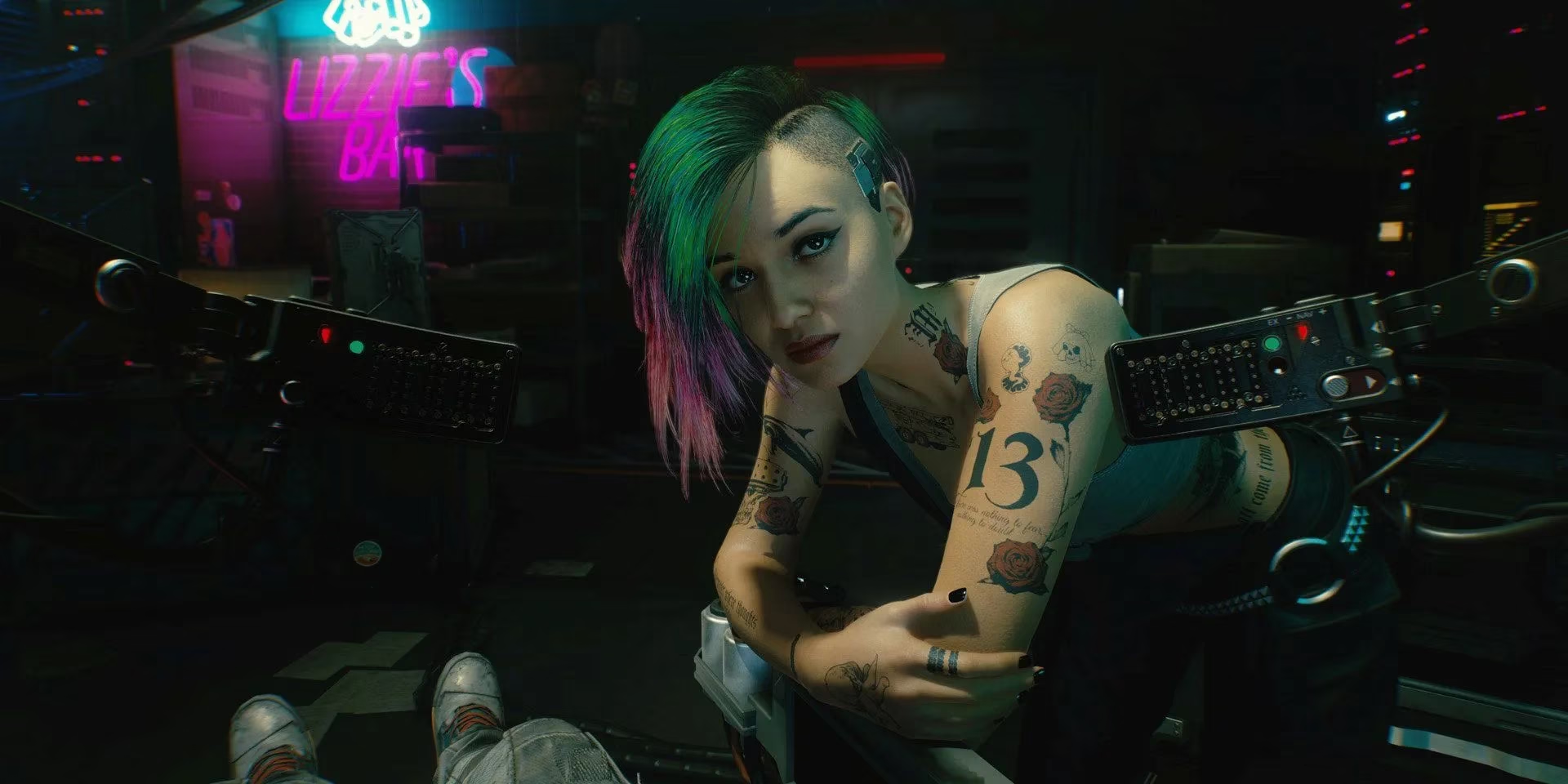
The first time around, I played as Dude V and romanced Panam. This time, I was playing as Lady V, so I had the option to romance Judy. I took it. Judy always seemed like the coolest romance option anyway. Being in a relationship with her eventually leads to a warning text that her grandmother may reach out to talk things over with V.
As I was finishing up the Phantom Liberty expansion, Judy’s grandmother reached out. She asked me what my intentions were with her granddaughter. I did my best to answer honestly. She was satisfied, and told me I could call her Abuela from then on. Then I texted Judy. She said she had just gotten off a call with her grandmother. She was relieved it went well.
That exchange had me on the edge of my seat, just like my real conversation with my father-in-law. I never really thought it would go badly in an intellectual sense, but the tension was still there. The game made me feel the weight of a conversation that had no combat, no quick-time events, and no failure state. Just two people talking.
That moment is just one example of how Cyberpunk 2077 skillfully uses phone calls and text messaging as storytelling tools. I rolled credits on the game last week, and when I look back, I realize that many of the best story moments were not inside main quests or side missions. They were phone calls with people I was getting to know, or text messages with favorites like Judy and Takemura.
So much about the characters is revealed by how they express themselves in text. Takemura is stiff and formal, even when he’s trying to be casual. Judy is warm and emotionally direct. Panam burns bright, then disappears when she’s hurt. Viktor feels steady, like a guy who has seen too much but still answers the phone. The game doesn’t have traveling companions like Starfield or Baldur’s Gate 3, but these phone moments accomplish something similar to roadside banter or a heart-to-heart at camp. It’s the perfect way to make sure that, no matter where you are in Night City, you’re never far from the people who matter to you.
The most powerful version of this hit me after I rolled straight from the Phantom Liberty ending into the main game ending. Having helped the NUSA in the DLC, V is given the chance to have the Johnny Silverhand construct surgically removed. The surgery goes as well as it can. R.I.P. Johnny. But it leaves V’s body unable to accept any cybernetic enhancements, even basic upgrades. Worse, V finds all of this out two years later because she slipped into a coma after the operation.
V is offered a ride back to Night City, but has to wait for the futuristic helicopter to fly around. That gives her time to call the important people from her playthrough. For me, that meant Judy, River, Panam, and Viktor.
Judy picked up. She was happy to hear from me, even though I had missed the date I said I would be back by one year and eleven months. V offered to meet up, to pick things up where they left off. But Judy was across the country, living in Pittsburgh, and married. That was major whiplash. Earlier the same day for me, I had been nervously answering her grandmother’s questions about my intentions. Now Judy had moved on completely.
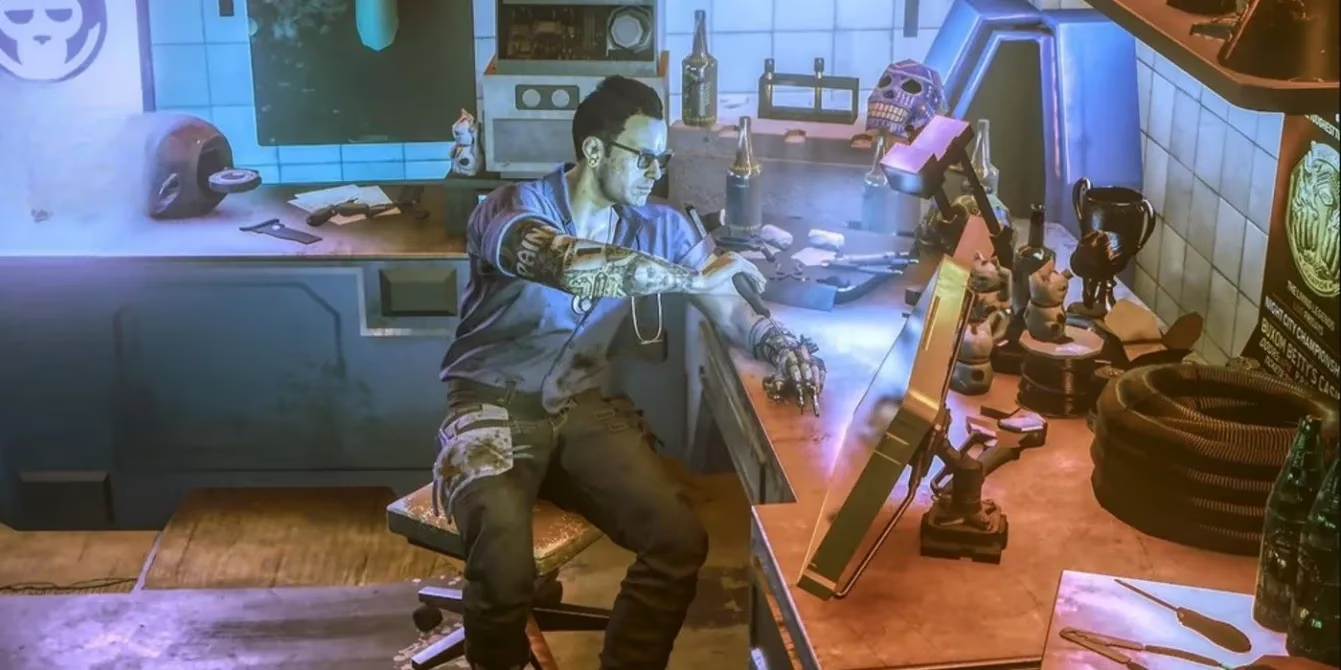
The other calls were not any better. River was feeling sad about his life and did not want to see me. Panam’s phone was out of the service area. Only Viktor was willing to meet up. He insisted the doctors were quacks for saying I would never use implants again. Spoiler: he was wrong.
When you go to call each of these old friends, you can see the record of texts and missed calls. All of them wondered where you were. All of them asked what was wrong. Eventually, they gave up and moved on. Judy’s hair is longer, now nearing her shoulders. You can see the passage of time in the view window and the pain of a friend disappearing in those desperate unanswered texts.
It’s surprisingly powerful stuff. Cyberpunk 2077 uses missed calls and unanswered messages as environmental storytelling, and video calls as a way to expose naked emotional truth. The phone log becomes a ghost story. You scroll through it and see the exact moment each relationship began to fade. Not many games make a text conversation feel as tense as a boss fight, but Cyberpunk 2077 does exactly that. 💔