In the ever-evolving landscape of video games, downloadable content (DLC) has become a staple for extending the life of a title. Three years after Cyberpunk 2077's triumphant comeback with the Phantom Liberty expansion, the industry continues to struggle with a subtle yet persistent problem: the narrative dissonance caused by suddenly accessible new regions. As players revisit Night City's neon-drenched streets in 2026, the memory of Dogtown's unexpected arrival still lingers as a prime example of immersion-breaking world-building.
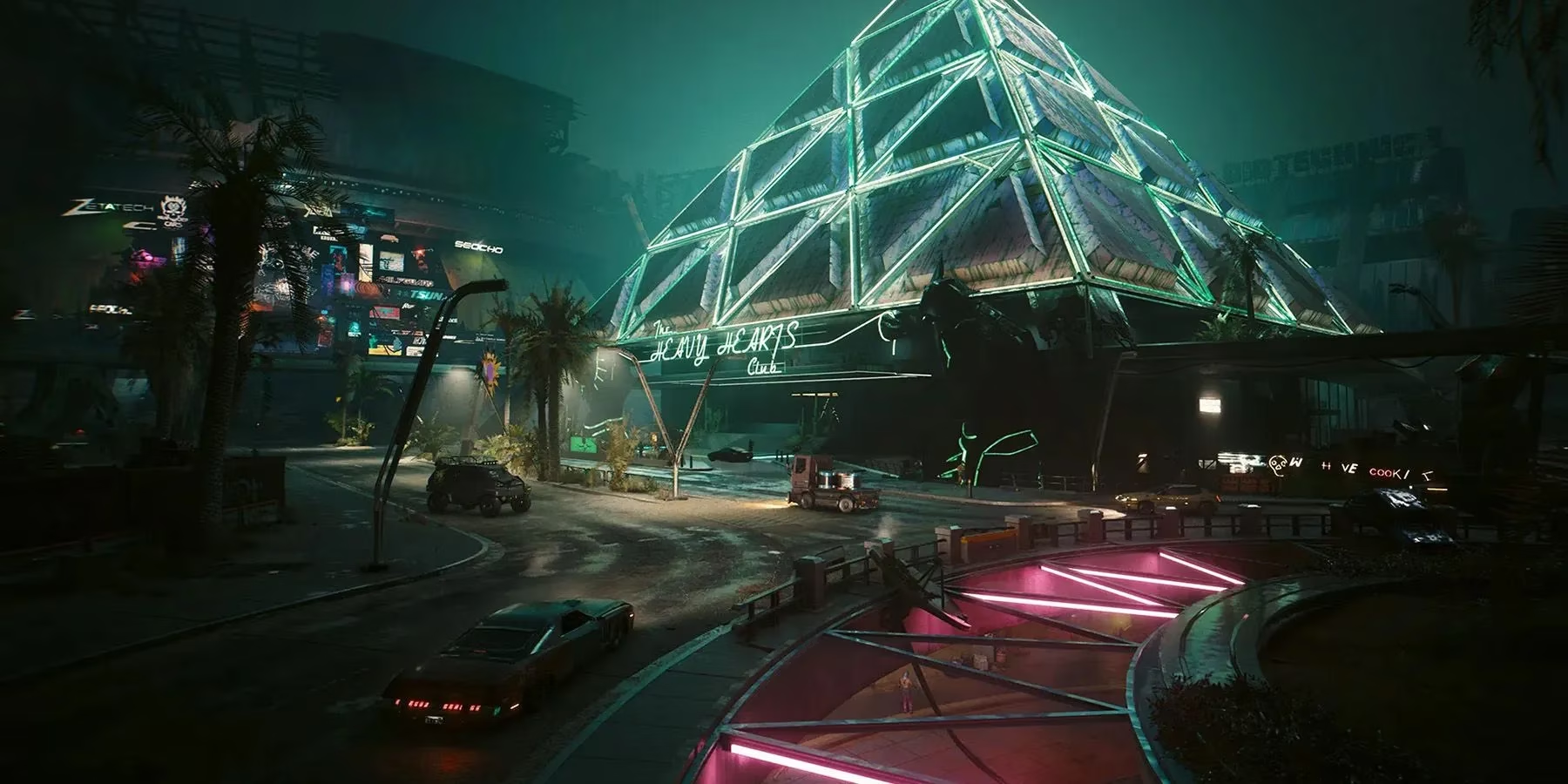
Phantom Liberty was widely celebrated for reinvigorating CD Projekt Red's futuristic RPG. The massive 2.0 update patched countless bugs and overhauled core systems, while the expansion itself delivered a gripping espionage thriller set in a brand-new sub-district called Dogtown. This ravaged enclave, controlled by a warlord and sealed off from the rest of Night City, offered players fresh quests, characters, and gear. However, its existence felt retrospectively inserted into a world that millions had already combed through thoroughly. For years, no NPC had uttered a word about this heavily fortified zone; no road signs pointed toward its gates; no lore shards hinted at its history. It simply materialized overnight.
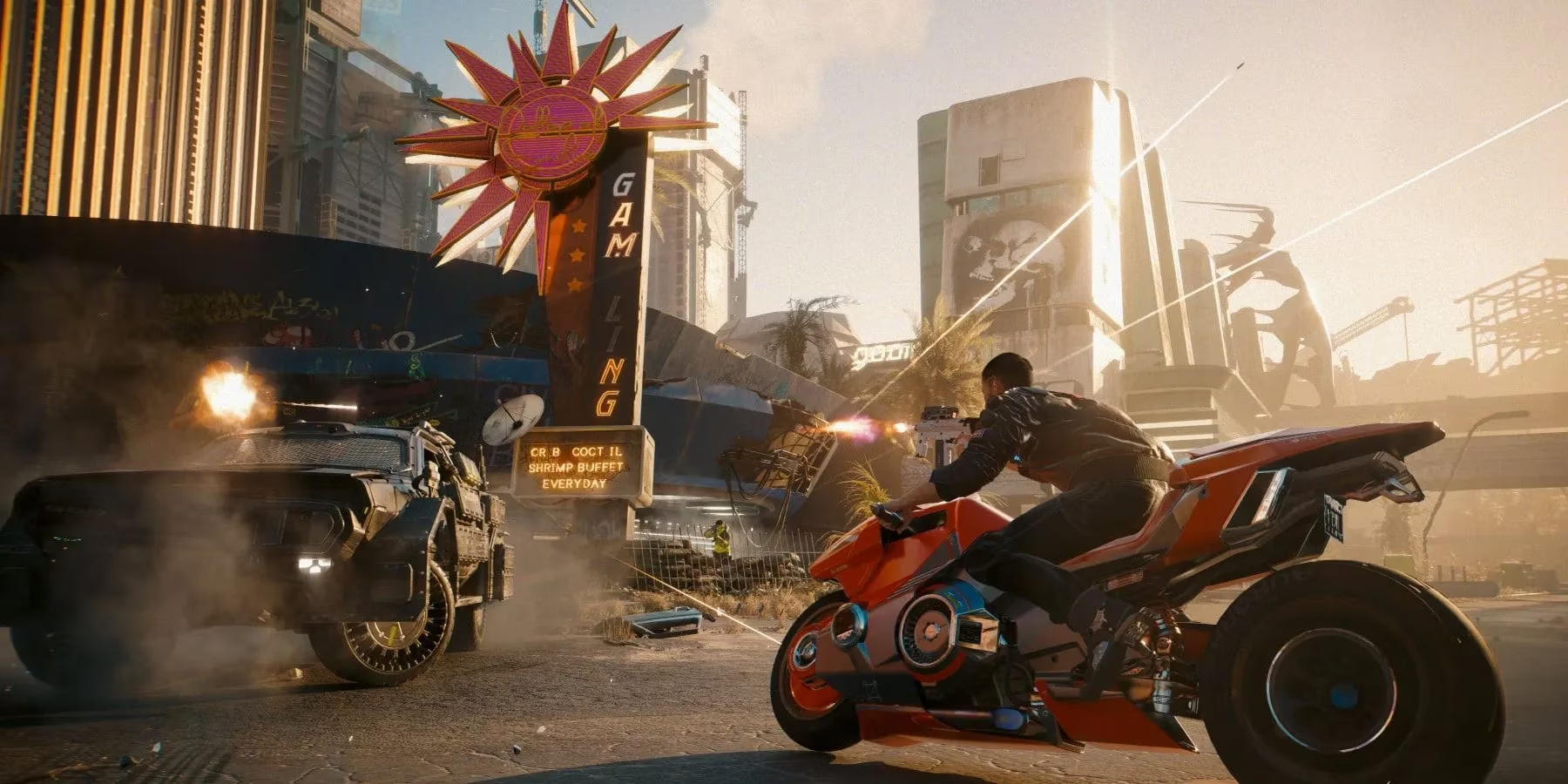
From a pure gameplay perspective, this is entirely understandable. Development cycles are unpredictable, and when Cyberpunk 2077 originally shipped in 2020, the Phantom Liberty storyline was merely a concept. Dogtown had not been designed, modeled, or written into the game's code. There was no guarantee that post-launch content would ever materialize, so reserving physical space or seeding teasers was a logistical risk. Yet, within the fiction of the universe, the sudden revelation of an entire district raises uncomfortable questions. Was Dogtown always there, and the protagonist simply ignored it? Did the population of Night City collectively forget to mention a war zone right next door? The silence speaks louder than any explication, chipping away at the carefully constructed sense of place.
This phenomenon is not unique to Cyberpunk 2077. The MMO genre has long been guilty of pulling entire continents out of the fog. World of Warcraft's Pandaria, for instance, emerged from a mystical shroud that no cartographer had previously pierced. Expansion packs for open-world RPGs like The Witcher 3: Blood and Wine also introduced the duchy of Toussaint, a previously unseen and unremarked-upon realm that Geralt could travel to at will. In each case, developers face a dilemma: they must expand the game without fundamentally altering the base campaign, so they opt for geographical isolation. A tunnel collapses, a quarantine is lifted, or a magical barrier dissipates—narrative contrivances that feel more like stage machinery than organic world evolution.
By 2026, player expectations have matured. Audiences now scrutinize environmental storytelling and demand cohesive, lived-in worlds. When a DLC region appears without historical roots, the suspension of disbelief required can overshadow the excitement of new content. This is not merely a matter of lore purism; it affects immersion, which is the very currency of role-playing games. A seamless addition would have the location mentioned in diaries, referenced in radio broadcasts, or visible—but inaccessible—from the outset, creating a sense of tantalizing mystery. Dogtown, for example, could have been depicted as a quarantined combat zone from the game's launch, its gates firmly shut with occasional gunfire echoing from within. That tiny detail would have laid the groundwork for Phantom Liberty's narrative, making the expansion feel like a key unlocking a door rather than a wizard conjuring a new room.
So why hasn't the industry changed? For one, retrofitting teasers into a shipped product is technically messy and can introduce bugs. Budgets are allocated for DLC development later, not for seeding clues years in advance. Moreover, many players simply do not care; they are hungry for extra missions and visual spectacle, forgiving inconsistencies in exchange for freshness. However, as gaming narratives become more ambitious and interconnected, the bar for world-building rises. Studios like FromSoftware have demonstrated the power of hidden, pre-planned areas—Elden Ring's Colosseums were physically present long before the related PvP DLC activated them, sparking endless community speculation without breaking the fiction.
Cyberpunk 2077's legacy, especially after its redemption arc, deserves a more elegant approach to future expansions. The next installment in the franchise, currently under development, has the opportunity to leave mysterious gaps on the map from day one—districts mentioned in passing, elevators that never arrive, skyways leading to locked-off arcs. When the eventual DLC drops, players could finally explore what they have always glimpsed, transforming a jarring addition into a satisfying narrative payoff. Until then, Dogtown remains a symbol of both creative triumph and a missed chance for deeper integration, reminding us that even the shiniest chrome can have a few seams showing.
Cyberpunk 2077: Phantom Liberty is available for PC, PS5, and Xbox Series X/S.