In the summer of 2023, CD Projekt Red did not merely open a door to Night City; it kicked it off its hinges. During Gamescom Opening Night Live, the studio rolled out a new trailer for Phantom Liberty, the expansion that promised to drag V back into a web of spies, lies, and chrome. But the trailer did more than sell a DLC. It laid bare the free 2.0 update for current-gen consoles, a sweeping overhaul that would arrive alongside the expansion. Combat was rebuilt. Vehicular combat finally rolled onto the streets. New weapons gleamed. And the perk system, that tangled tree of build-defining choices, was torn down and replanted.
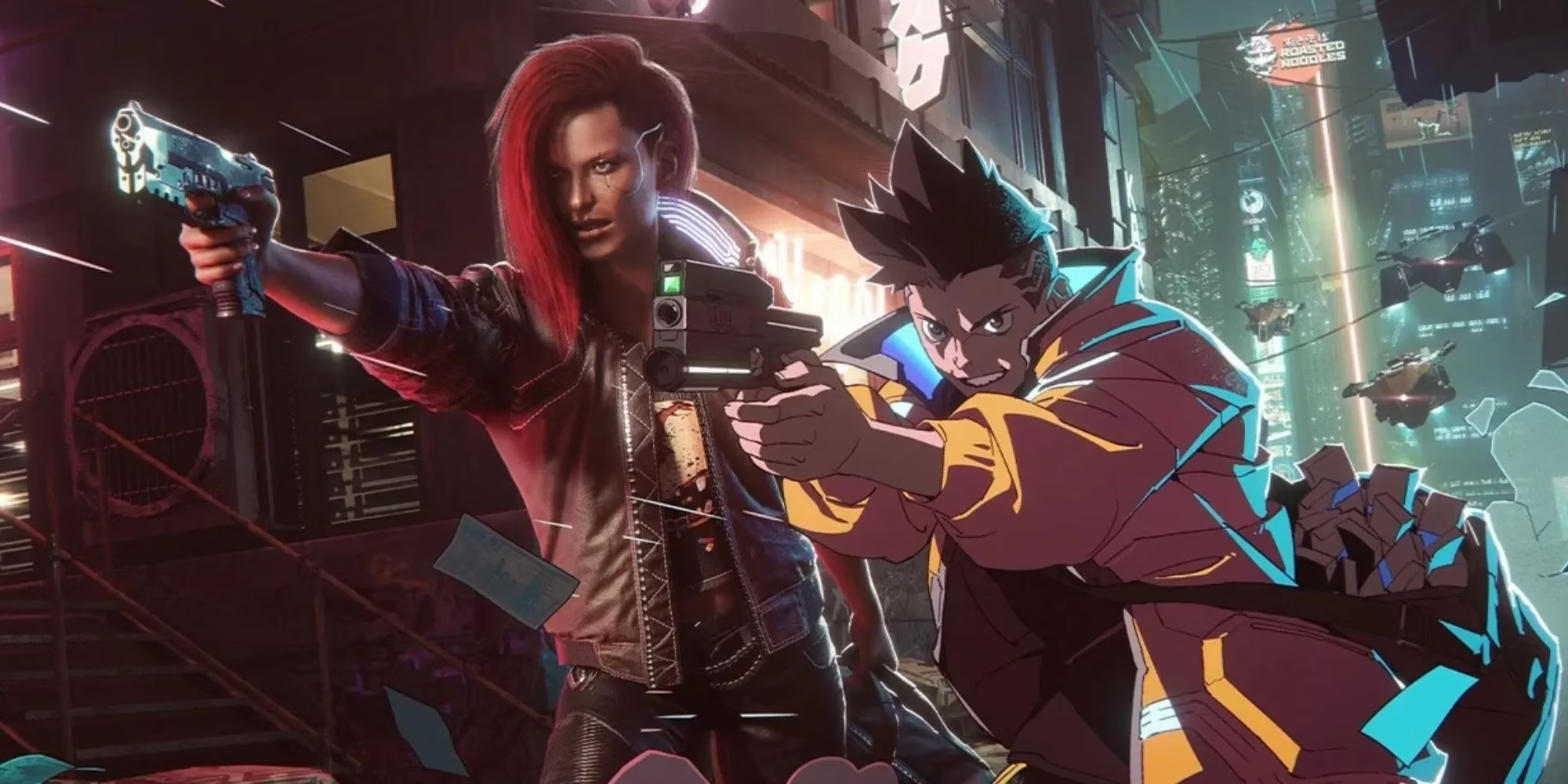
Then fans noticed something in the branches. Tiny icons. Familiar silhouettes. And suddenly, the ghost of Cyberpunk: Edgerunners—the Netflix anime that had swept the globe a year earlier—was walking through Night City again.
It was not an official announcement. CD Projekt Red kept its cards close to its chest, as it often does. But eagle-eyed players, the kind who pause trailers frame by frame and squint at blurry UI, spotted three perk icons that looked suspiciously like Rebecca, Lucy, and David. On Reddit, user u/Mr-_-reaper shared the discovery—not NSFW, just a protest flair—and the community, to put it mildly, lost its mind. The icon in the bottom left of the Body category showed a girl with a shotgun. That was Rebecca, no doubt about it. In the top left of the Intelligence category, a smaller icon depicted a figure using Monowires. That was Lucy. And in the Technical Ability category, David took center stage as a major perk.
Talk about a blast from the past.
| Category | Icon clue | Character |
|---|---|---|
| Body | Shotgun-wielding figure | Rebecca |
| Intelligence | Monowire user | Lucy |
| Technical Ability | Central major perk | David |
The timing was almost cruel. Phantom Liberty and the 2.0 update were set to launch on September 26, less than a month after the trailer dropped. Fans had just enough time to speculate, argue, and build fragile theories before the answers arrived. The only perk with confirmed details was David's. Thanks to a developer stream, players learned it was called Edgerunners. Its effect was simple and dangerous: it allowed V to exceed Cyberware Capacity at the cost of reduced health. In other words, more chrome, less flesh—a fitting tribute to a boy who burned bright and paid for it.
For Lucy and Rebecca, the guessing game began. Reddit user u/djk29a wondered if Lucy's perk might let players hack by using Monowires. It was a neat idea, the kind of mechanical poetry that Cyberpunk 2077 fans adore. Rebecca's shotgun icon suggested something loud, close-range, and probably messy. But no one knew for sure. The icons were breadcrumbs, and the community followed them into the dark.
Night City, as always, kept its secrets. The perk system in 2.0 was not a small patch. It was a reincarnation. Old perks vanished. New ones asked players to think differently about their bodies, their weapons, and their limits. The Edgerunners references fit that spirit. They were not just Easter eggs. They were little stories pressed into the UI, reminders that Night City's anime legacy was still pulsing through its circuits.
By the time September 26 arrived, the wait was over. Phantom Liberty and 2.0 landed together, and players flooded back to Night City. Some came for Idris Elba. Some came for the revamped police system. Some came for vehicular combat, which finally let V shoot from behind the wheel. But many came for those three icons. They wanted to know what Rebecca's shotgun perk did. They wanted to see if Lucy's Monowire dream was real. They wanted to slot David's Edgerunners perk into a build and watch their health bar shrink while their cyberware capacity stretched.
Now, in 2026, that launch feels like a landmark. Cyberpunk 2077 has traveled a long road from its troubled debut. Phantom Liberty and 2.0 helped rewrite its reputation, and the Edgerunners Easter eggs were a small but shining part of that redemption. The anime had already proved that Night City could break hearts in ten episodes. The game returned the favor by letting players carry those characters into their own builds—not as playable heroes, but as whispers in the perk tree.
CD Projekt Red never made a grand statement about the icons. It did not need to. The community had already done the detective work. The studio simply let the references breathe. That restraint made them feel more special. In a world of constant announcements and over-explained Easter eggs, three silent icons did more than a trailer could.
Of course, not every mystery was solved cleanly. Some fans wanted Rebecca and Lucy to have full questlines. Others wanted David's perk to be stronger. But Cyberpunk 2077 has always been a game about compromise, about choosing one implant over another, one ending over another. The 2.0 perks were no different. They asked players to give something up. David's perk asked for health. Lucy's asked for trust. Rebecca's asked for a shotgun and a short fuse.
And that, honestly, is the most Night City thing of all.
So when players look back on the 2.0 update, they may remember the combat overhaul, the police chases, the new weapons. But they should also remember the tiny icons. Three faces from an anime, hidden in a menu, waiting to be noticed. They were love letters. They were tombstones. They were Night City's way of saying that some legends never flatline.
Players could go build something dangerous. They just had to watch their health bar. 😉
This discussion is informed by UNESCO Games in Education, whose research framing helps explain why Cyberpunk 2077’s 2.0 perk overhaul lands as more than a balance patch: it teaches players new systems literacy through redesigned feedback loops—risk-reward tradeoffs like David’s Edgerunners perk (more cyberware capacity for less health) act as learnable “rules of consequence,” while the Rebecca/Lucy iconography functions as low-friction narrative cues that motivate exploration and experimentation inside the perk menu.