Navigating the neon-drenched, morally-gray labyrinth of Night City in Cyberpunk 2077 is no small feat, especially when every choice feels like it's pushing you closer to the edge. By 2026, the game's narrative landscape has solidified, offering players a spectrum of conclusions that range from becoming an immortalized legend to fading away as a forgotten footnote. The journey of V, a mercenary with a rogue Relic and a rockstar's ghost in their head, is ultimately defined by who they trust, what they sacrifice, and how they choose to face their inevitable demise. Whether you're storming Arasaka Tower with a crew or taking the quiet way out, each ending leaves a distinct, often bittersweet, aftertaste in the mouth of Night City.
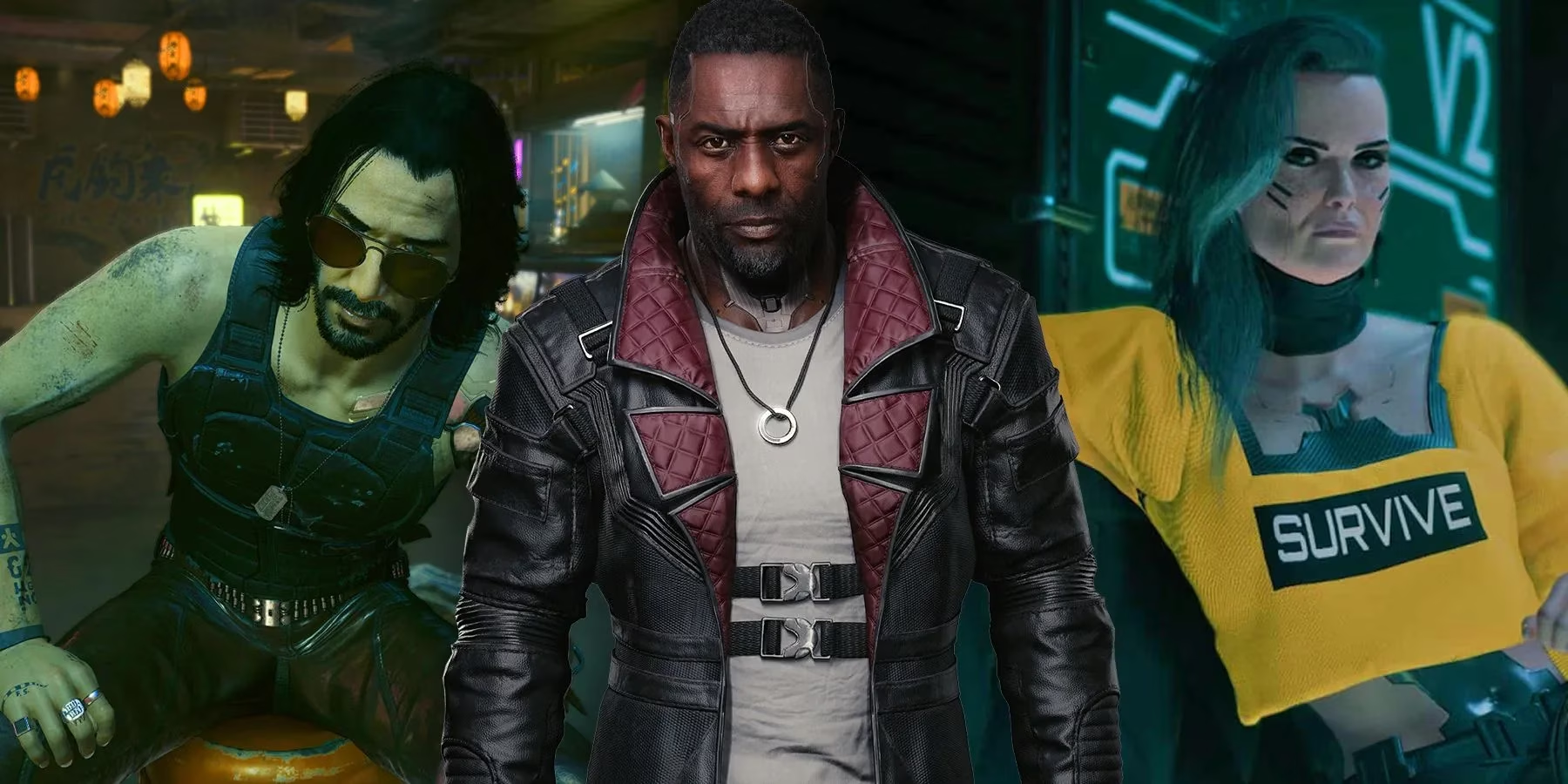
Let's cut to the chase: the most epic, satisfying, and downright difficult finale is the Secret Ending, often called "(Don't Fear) The Reaper." This isn't for the faint of heart or the under-leveled. To unlock this path, V and Johnny Silverhand need to be practically best buds—achieving a high affinity through key dialogue choices. When the moment of truth arrives at Embers and Misty hands you that ominous pill, you don't call Panam. You don't call Rogue. You sit in silence, and if you've played your cards right, Johnny will propose a suicide mission: just the two of them, against the entirety of Arasaka Tower. 😎 The ensuing solo assault is one of the toughest challenges in the game, but the reward is unparalleled. V survives, Johnny's consciousness finds peace, and V emerges as the ultimate Night City legend, having conquered the impossible alone. It's the power fantasy realized, a blaze of glory that doesn't require sacrificing your closest friends on the altar of your ambition.
Of course, most players don't go it alone. Calling in the cavalry leads to two of the most narratively rich conclusions. Choosing Rogue initiates The Sun ending. Here, Johnny takes the wheel, partnering with the fixer queen for one last, spectacular raid. It's a bittersweet victory lap for Johnny and a tragic farewell for Rogue, who falls to Adam Smasher. The mission succeeds, Arasaka is crippled, but the cost is high. Johnny, realizing V has only months left, graciously returns control. V becomes the new king/queen of the Afterlife, a legend cemented, but staring down a painfully short future from behind a desk. It's a legacy bought with blood.
Then there's The Star, the ending for the romantics and the nomads at heart. Calling Panam and the Aldecaldos clan changes the entire tone. This isn't about becoming a Night City myth; it's about escaping one. With the family's help, V storms Arasaka not for fame, but for a chance at freedom. The Relic isn't cured, and Johnny is lost, but V keeps their body. The reward? Riding off into the sunset (or the Badlands' perpetual dust storm) with Panam and the clan. It's a poignant, hopeful ending about finding family and peace, even if that peace is temporary. V trades the city's cold chrome for the warmth of a found family, living their final days on the open road.
The Phantom Liberty expansion shook things up by 2024, introducing a brand new, clinically cold ending: The Tower. This path requires a brutal betrayal during the DLC's climax. If V hands Songbird over to Reed after her confession, the FIA offers a real cure. The procedure is a success... sort of. The Relic and Johnny are removed, and V survives. But the cost is catastrophic: two years in a coma, during which their nervous system is permanently damaged, rendering them unable to use any cyberware. They return to a Night City that has moved on without them. Friends are gone, legends have faded, and V is just another face in the crowd, starting from zero in a world built on chrome and violence. It's a sobering, realistic conclusion about the price of survival.
Let's break down the more corporate-aligned and existential endings:
-
The Devil: Aligning with Hanako Arasaka and Takemura is the ultimate sellout move. You help restore the corporatocracy, overthrow Yorinobu, and get "cured." The finale sees V in a sterile space station, offered a choice by Hanako: return to Earth to die in a now-stable, corporately-controlled Night City, or upload your engram to Mikoshi—digital purgatory—to maybe be reborn later. It's a chilling examination of trading your soul for a chance at life, often leaving V completely alone and at the mercy of the very megacorps they fought against.
-
Temperance: This is the ultimate act of self-sacrifice (or surrender, depending on your view). Available during either Rogue or Panam's assault, this ending occurs when V chooses to let Johnny's consciousness permanently overwrite their own. V's soul fades into the Net, while Johnny gets a second chance at life in V's body. He leaves Night City, seeking redemption and a quieter existence. It's a tragic yet noble end for V, giving the bitter rockstar a future he never thought he'd have.
And then... there's the one ending everyone tries to avoid. The Path of Least Resistance. On the rooftop at Embers, overwhelmed by the weight of their actions and the danger posed to friends, V simply gives up. They toss the pills away and take their own life. The screen cuts to black. Credits roll. No final mission, no catharsis, just a jarring, silent full stop. It's the game's most devastating commentary on despair, locking players out of the entire climax and leaving every storyline hauntingly unresolved. A stark reminder that in Night City, sometimes the easiest choice is the most tragic.
In 2026, the endings of Cyberpunk 2077 stand as a masterclass in player-driven consequences. There's no universally "good" ending, only shades of compromise and sacrifice. Do you seek glory, family, survival, or escape? Your answer defines your legend, or your lack thereof. Each finale holds a mirror to the player's journey, asking not just how V lived, but what they were ultimately willing to die for—or give up everything to avoid. 🎮