The gaming industry's acquisition frenzy has been the talk of the town for the past few years. From Microsoft's monumental $69 billion purchase of Activision Blizzard to Embracer Group's shopping spree, it seemed like every major studio was either buying or being bought. Rumors swirled around industry giants like Capcom and Square Enix, with speculation running wild about who might be next. Yet amidst this corporate consolidation chaos, one prominent developer has drawn a clear line in the sand. CD Projekt Red, the creative force behind legendary titles like The Witcher series and Cyberpunk 2077, has made it abundantly clear—they're not for sale, and they plan to grow on their own terms. This stance isn't just corporate posturing; it's a declaration of independence in an industry increasingly dominated by mega-corporations.
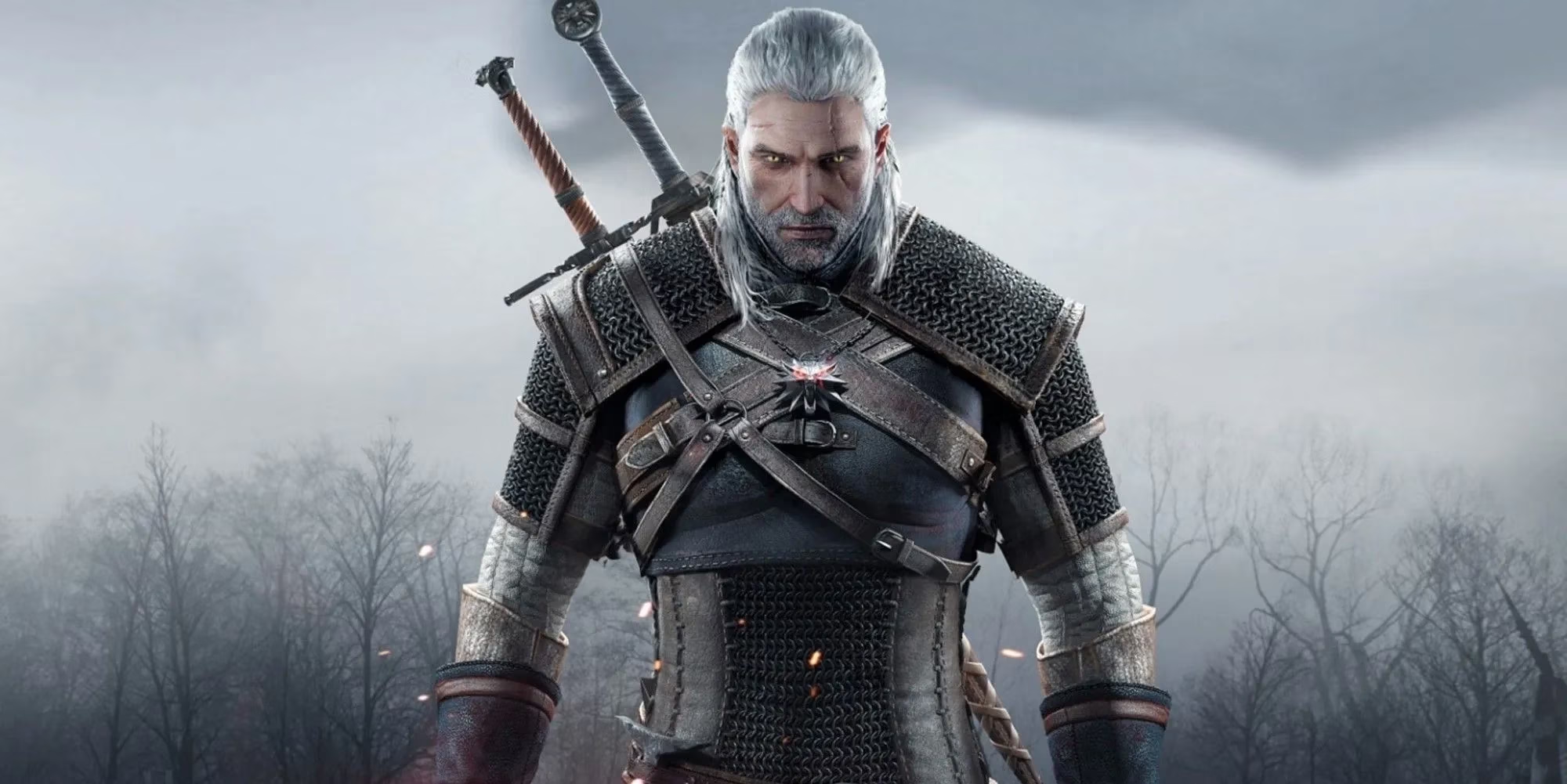
The Strategy Chief Speaks: Independence as Core Philosophy
Adam Kiciński, the chief strategy officer of CD Projekt's parent company CD Projekt S.A., recently sat down with Polish financial outlet Parkiet for a revealing conversation. When directly questioned about whether the studio would ever consider being acquired by a larger entity, Kiciński's response was unequivocal. "That isn't on the cards for the company," he stated firmly, adding that CD Projekt plans to get "even bigger and stronger" through its own efforts. This wasn't just a polite dismissal—it was a strategic manifesto. The message was clear: while others might seek the shelter of corporate giants, CD Projekt Red believes its future lies in maintaining creative and operational autonomy. Kiciński suggested the studio is actually better off without what he called a "larger entity" hovering overhead, preferring to maintain the independent position it has cultivated over years.
Why This Makes Perfect Sense
When you look at CD Projekt Red's current pipeline, their confidence suddenly clicks into place. I mean, come on—this studio isn't exactly twiddling its thumbs! They've got enough projects in development to keep three studios busy:
-
🎮 Cyberpunk 2077 sequel (codenamed Orion)
-
⚔️ New Witcher trilogy (starting with Polaris)
-
🔄 The Witcher remake (first game rebuilt in Unreal Engine 5)
-
🌌 New IP (codenamed Hadar)
That's not even mentioning their continued support for Cyberpunk 2077 through updates and the massive Phantom Liberty expansion. With this much on their plate, the idea of integrating into a larger corporate structure sounds less like an opportunity and more like a bureaucratic nightmare. As Kiciński hinted, sometimes too many cooks really do spoil the broth—especially when those cooks are corporate executives with spreadsheets instead of creative vision.
The Microsoft Question: A Relationship, Not a Takeover
Many industry observers had speculated that CD Projekt Red might be a prime acquisition target for Microsoft, given their close collaboration over recent years. The studio's games have featured prominently on Xbox platforms and Game Pass, creating what appeared to be a natural alignment. But here's the thing about assumptions—they often miss the nuance. While CD Projekt has enjoyed a productive partnership with Microsoft, they've consistently maintained their independence. Think of it like a successful musician who collaborates with a major label but still owns their masters and controls their creative direction. The relationship works precisely because it's a partnership, not an ownership situation. Kiciński's comments effectively shut down any lingering acquisition speculation, confirming that what works between the companies is the current arrangement, not a corporate merger.
The Industry Context: Standing Out in a Sea of Consolidation
Let's be real for a moment—the gaming landscape in 2026 looks dramatically different than it did just five years ago. The acquisition spree has reshaped the industry in fundamental ways:
| Year | Major Acquisition | Approximate Value |
|---|---|---|
| 2023 | Microsoft acquires Activision Blizzard | $69 billion |
| 2024-2025 | Embracer Group's acquisition spree | Multiple billions |
| 2025 | Take-Two completes major studio purchases | Undisclosed billions |
In this environment, CD Projekt Red's insistence on independence isn't just noteworthy—it's borderline revolutionary. While other studios have traded autonomy for financial security and resources, the Polish developer has doubled down on its original vision. They're betting that creative freedom and direct connection with their audience will ultimately prove more valuable than corporate backing. And given their track record—from the cultural phenomenon of The Witcher 3 to the remarkable redemption arc of Cyberpunk 2077—it's a bet that might just pay off spectacularly.
What Independence Actually Means for Gamers
For players, CD Projekt Red's stance has tangible implications. Independent development typically means:
-
Creative risks that corporate-owned studios might avoid
-
Longer development cycles focused on quality rather than quarterly reports
-
Direct developer-player relationships without corporate layers
-
Unique visions that might not fit traditional market analysis
Remember how The Witcher 3 defied conventional wisdom about open-world RPGs? Or how Cyberpunk 2077 pushed boundaries despite its rocky launch? These are the kinds of projects that often get watered down or canceled entirely in more corporate environments. By staying independent, CD Projekt Red preserves its ability to take these creative leaps—for better or worse.
The Road Ahead: Bigger and Stronger, But Still Themselves
Kiciński's vision of CD Projekt Red growing "even bigger and stronger" suggests expansion, but on their own terms. The studio has been gradually increasing its workforce and establishing new teams in North America for their upcoming projects. This growth strategy appears focused on enhancing their capabilities while preserving their culture—a delicate balancing act that many acquired studios struggle with post-merger.
The silence after Kiciński's statement speaks volumes too... There's something powerful about a studio that knows exactly what it wants to be. In an industry where corporate reshuffling has become routine, CD Projekt Red's commitment to independence feels refreshingly old-school—like a craft brewery insisting on small batches in an age of factory-produced beer.
Final Thoughts: Why This Matters Beyond One Studio
CD Projekt Red's stance represents more than just corporate strategy; it's a statement about artistic integrity in the gaming industry. As development costs skyrocket and corporate consolidation increases, the pressure on studios to sell grows correspondingly. By publicly declaring their commitment to independence, CD Projekt Red isn't just making a business decision—they're setting an example. They're proving that it's possible to create blockbuster, world-class games without becoming just another division in a corporate conglomerate.
In 2026, with the industry still processing the aftermath of its acquisition frenzy, CD Projekt Red stands as a reminder that sometimes the most powerful position isn't being the biggest fish in the pond, but being the one that controls its own waters. Their upcoming projects will test whether this independent path can sustain their ambitious vision—but if their history is any indication, they just might redefine what success looks like in the modern gaming landscape.