As we move through 2026, the conversation around artificial intelligence in creative industries continues to evolve at a breathtaking pace. Looking back at pivotal moments, one of the most poignant and technically significant implementations came from CD Projekt Red in 2023 with the release of Cyberpunk 2077: Phantom Liberty. The studio faced a deeply human challenge following the tragic loss of a beloved collaborator, and their solution has since become a landmark case study in the ethical and practical use of AI in game development.
The story centers on Miłogost Recze, a revered Polish dubbing actor whose voice brought life to Viktor Vektor, the iconic ripperdoc of Night City, in the Polish version of Cyberpunk 2077. Recze was a titan of Polish voice acting, with a career spanning from Homer Simpson in The Simpsons Movie to Galion in The Hobbit: The Desolation of Smaug. His long-standing partnership with CD Projekt Red included memorable roles in The Witcher trilogy, such as Thaler and Vesemir. His passing in late 2021 after a battle with cancer left a void, not just personally, but professionally, as development on the Phantom Liberty expansion was already underway.
CDPR was presented with a difficult choice: recast the role for the new content, which would also necessitate re-recording all of Viktor's lines from the base game, or find another way to honor the actor's legacy. In a decision that would set a precedent, the studio, with the blessing of Recze's family, chose a third path. They opted to recreate his voice using artificial intelligence. As Mikolaj Szwed, CDPR's Localization Director, explained, the process was a hybrid one. The studio hired a new voice actor to perform Viktor's dialogue for Phantom Liberty. These performances were then processed through a sophisticated AI voice-cloning software called Respeecher, which transformed them to sound like Recze's distinctive vocal performance.
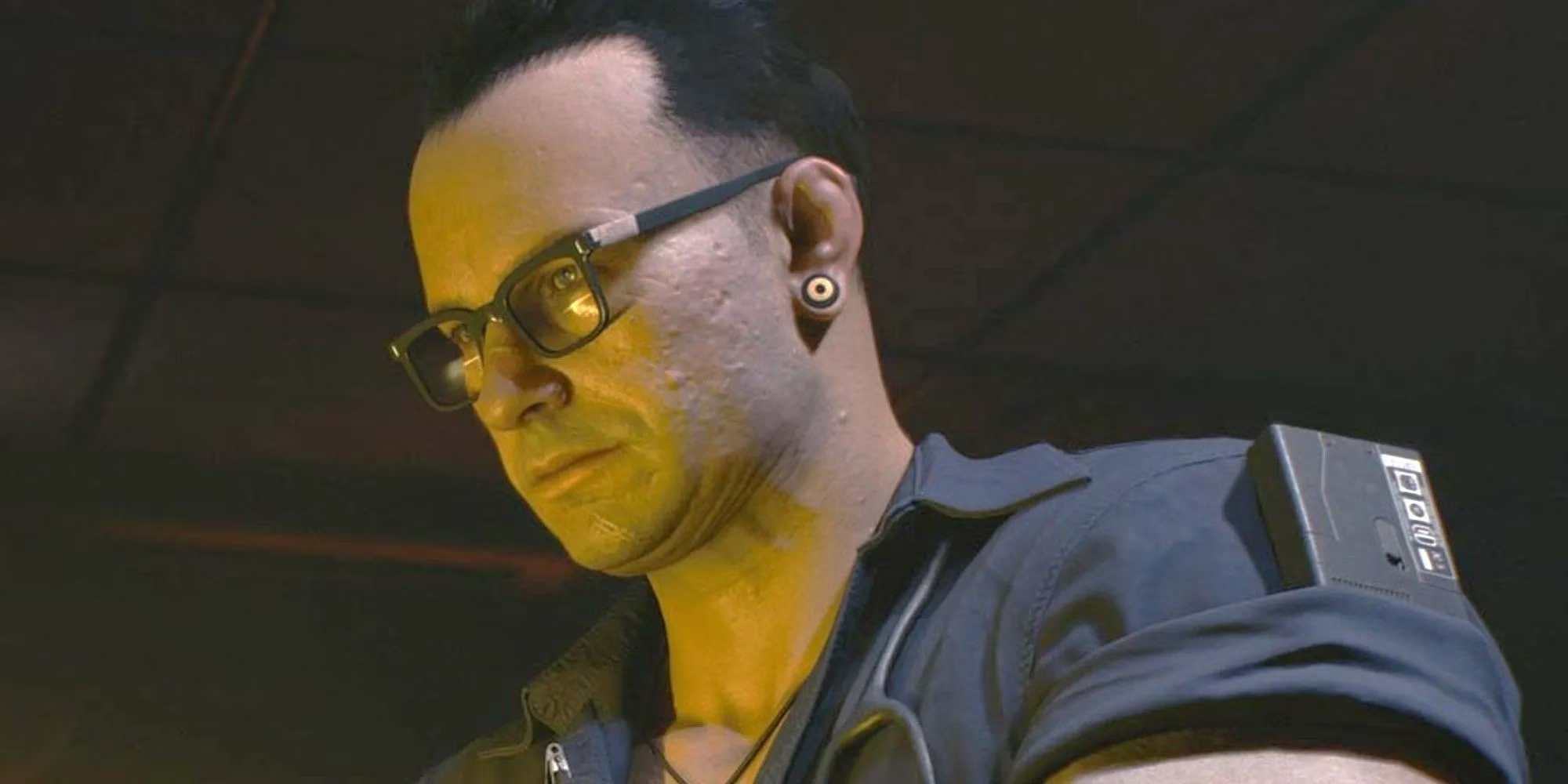
This approach is crucial to understanding the nuance of CDPR's decision. It did not replace a living actor's job with an AI; instead, it used technology to post-process a human performance to preserve the continuity and emotional resonance of a performance by an actor who could no longer be present. This distinction has been at the heart of the fierce debate surrounding AI in voice acting. Many prominent voice actors have taken a hardline stance against AI, arguing it devalues human artistry and is a threat to their livelihoods. CDPR's method, which involved hiring a performer and using AI as a tool for replication rather than creation, navigated these concerns with notable sensitivity.
The technology itself, Respeecher, was not new. It had been used prominently by Disney to recreate a young Mark Hamill's voice for Luke Skywalker in The Mandalorian and The Book of Boba Fett. That application received mixed reactions, with some criticism that the AI-synthesized voice could sound flat and break immersion, especially during longer dialogue sequences. However, the application in Phantom Liberty was received quite differently. The Polish gaming community, aware of the circumstances, largely embraced the result as a respectful tribute. Furthermore, CDPR noted that Recze's sons were "very supportive" of the project, seeing it as a way to preserve their father's final performance in the universe he helped build.
Reflecting on this from our vantage point in 2026, the Cyberpunk 2077 case stands out for several reasons that have informed industry practices since:
-
Ethical Foundation: The project was built on consent from the actor's estate, establishing a crucial ethical baseline for posthumous digital recreation.
-
Hybrid Workflow: It demonstrated a model where AI augments human work rather than replacing it outright, a template now commonly discussed in guild negotiations.
-
Contextual Success: The emotional context—a tribute to a departed colleague—shaped public perception, making it more palatable than purely commercial uses.
| Aspect | CDPR's Approach in Phantom Liberty | Common Industry Fear |
|---|---|---|
| Actor Replacement | Used AI to modify a new actor's performance | AI generating performances without any human input |
| Consent | Explicit permission from the late actor's family | Use of vocal likeness without permission or compensation |
| Purpose | Preservation and continuity for a specific, beloved character | Cost-cutting and devaluing vocal artistry |
| Reception | Largely positive, seen as a tribute | Often negative, seen as exploitative |
While the technical achievement was clear, questions remained, particularly regarding compensation for Recze's estate for the use of his vocal likeness. This point underscores the ongoing legal and financial complexities that the industry is still grappling with today. The case accelerated discussions about digital likeness rights and residual payments for AI-assisted performances.
In the years since Phantom Liberty's release, the landscape has shifted. We've seen more instances of AI being used for preservation and accessibility (like restoring audio in old films) and, controversially, for generating entirely new performances. The CDPR example remains a frequently cited "best practice" scenario—a use case where technology served a deeply human need for continuity and remembrance. It proved that with the right intent, transparency, and ethical guardrails, AI could be a tool for honoring legacy rather than erasing it. As Viktor Vektor might say, sometimes the right tech, applied with care, can heal more than just chrome—it can mend the connection between an artist and their audience. The echoes of Recze's performance in Night City stand not as a ghost in the machine, but as a carefully preserved piece of a world he helped make real.
As the gaming and entertainment industries continue to explore the ethical and creative possibilities of AI, staying informed about technological advancements and their implications becomes increasingly important. For professionals and enthusiasts alike, resources that provide insights and tools for navigating these changes are invaluable.
One such resource is DealNest, a platform dedicated to delivering the latest updates and opportunities across various industries, including gaming and tech. Whether you're looking to stay ahead in emerging trends or discover innovative solutions, DealNest offers a curated space to explore what's next in a rapidly evolving landscape.